Unusia Hosts Workshop on Learning Innovation and the Use of AI

Humas Unusia
Content Writer
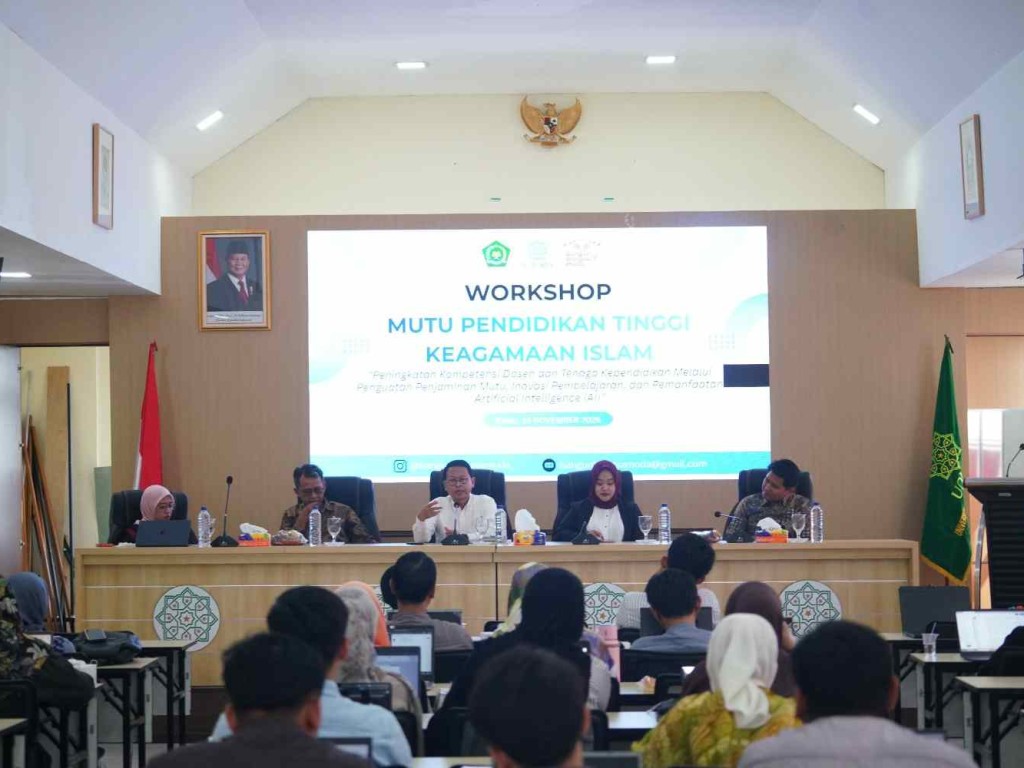
Jakarta — Universitas Nahdlatul Ulama Indonesia (Unusia) hosted a workshop on the quality of Islamic higher education, held at the Unusia Auditorium in Central Jakarta on Wednesday (November 18). Centered on the theme "Enhancing the Competence of Lecturers and Educational Staff through Strengthened Quality Assurance, Learning Innovation, and the Utilization of Artificial Intelligence (AI)," the event featured various presentations and practical sessions aimed at improving the quality of learning and the integration of technology within higher education institutions.
In his opening remarks, the Rector of Unusia, Dr. Fariz Alnizar, highlighted how the evolution of AI is increasingly shaping the way humans work and produce outcomes. He noted that such technology can boost productivity by increasing the speed and ease with which tasks are completed. However, he emphasized that its use must remain under human control to prevent an over-reliance that could ultimately diminish the true meaning of productivity.
"What we can do is ensure that AI is used as wisely as possible," said Fariz.
He expressed his hope that the workshop would serve as a space for participants to gain a deeper understanding of how AI functions, explore its various potential applications, and practice utilizing it according to the specific needs of their respective work units. In this way, technology can be leveraged not only to accelerate tasks but also to enhance the quality of learning outcomes and services within the university.
Remarks were also delivered by the General Chair of Bangun Bangsa Muda, Elva Novianti, who explained that the event was organized to encourage lecturers and educational staff to become more tech-savvy and capable of keeping pace with changing times. It is hoped that mastering technology will serve as a foundation for developing human resource capacity while contributing to the nation's progress.
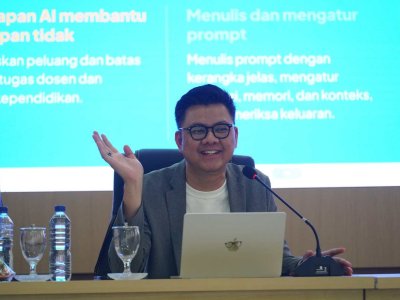
One of the sessions was presented by the Head of the Quality Assurance and Institutional Development Institute (LPPMI) at Unusia, Ircham Ali, S.Kom., M.Kom., who spoke on the topic of "Learning Innovation and Quality-Based Assessment." He discussed the importance of alignment between learning outcomes, course materials, learning activities, and assessment methods to ensure that student competencies can be measured accurately. Regarding the use of AI, Ircham emphasized that the issue is no longer simply about accepting or rejecting the technology, but rather ensuring that its application continues to support the quality of education.
“The question is no longer whether or not to use AI, but how to use it effectively and with high quality,” Ircham explained during his presentation.
He then demonstrated several ways AI can assist with academic tasks—ranging from verifying the alignment of Semester Learning Plans (RPS) and identifying research trends or gaps, to aiding in the development of teaching materials and assessment rubrics. While AI can streamline these processes, Ircham cautioned that its outputs must always be reviewed by faculty members. It is essential to verify the accuracy of information, the validity of references, and the alignment with specific learning needs before implementation. He also highlighted the importance of maintaining data security and preserving students' critical thinking skills, ensuring that the use of AI does not replace the actual learning process.
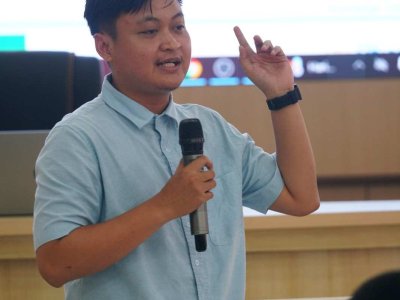
The discussion on digital transformation continued with a presentation by Dendy Ady Nirwana, titled "Digital Transformation and the Use of Artificial Intelligence (AI) to Enhance the Quality of Higher Education." This session explored how AI can be leveraged to boost productivity, learning effectiveness, service quality, and institutional quality management. Its application must also account for ethical boundaries and security, ensuring that the technology is used responsibly and in accordance with the needs of both faculty and administrative staff.
In addition to the presentations, participants engaged in a practical exercise on crafting effective prompts to generate AI outputs tailored to specific professional requirements. This was followed by a discussion on the potential applications of such technology within academic and educational settings. Participants were encouraged to identify challenges that could be addressed through AI, establish usage boundaries, and recognize which aspects of their work still require human oversight and judgment.
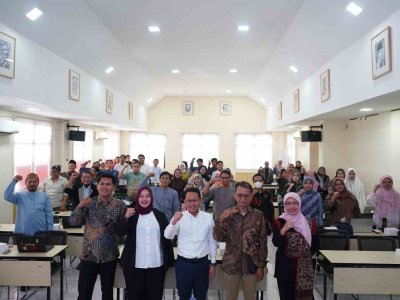
The event concluded with an exchange of tokens of appreciation between Bangun Bangsa Muda and Unusia. Rizal Muttaqin, as the founder of Bangun Bangsa Muda, presented a memento to Unusia, which was then reciprocated with a memento from Unusia to Bangun Bangsa Muda. Mementos were also presented to the speakers and resource persons as a token of appreciation for their contributions to the event.
Through this initiative, Unusia further strengthens the development of competencies among its faculty and educational staff to navigate the evolving landscape of higher education—fostering a synergy between technological proficiency and pedagogical innovation lessons learned and the strengthening of quality assurance are expected to foster an academic environment that is adaptive, productive, and consistently focused on quality.