Exploring the Intersection of Islam and Confucianism at the International Forum AICIS+ 2026

Humas Unusia
Content Writer
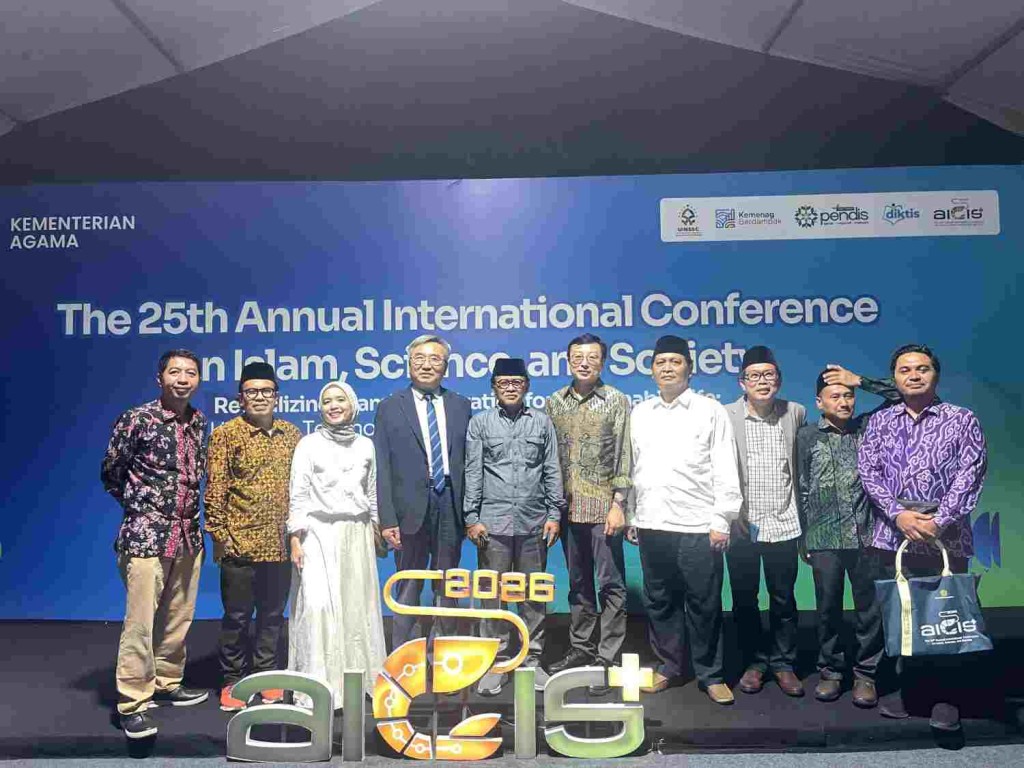
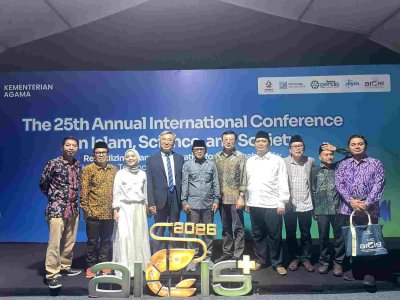
Cirebon — The Nahdlatul Ulama University of Indonesia (Unusia), through its Faculty of Nusantara Islam and the Center for Sino-Nusantara Studies (CSNS), participated in a series of special sessions at the 25th Annual International Conference on Islam, Science, and Society (AICIS+) 2026. This international forum brought together academics and researchers to examine the relationship between Nusantara Islam and Chinese Confucianism, while exploring the relevance of traditional heritage in fostering human-centered technological innovation and global harmony.
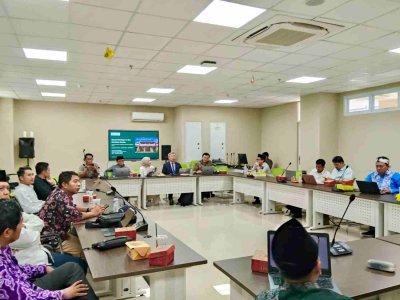
The event, held on Thursday (November 19) at the Cyber Building (4th Floor) of UIN Siber Syekh Nurjati Cirebon (UINSSC), was themed “Confucianism in China and Islam Nusantara in Indonesia: Revitalizing Traditional Heritage and Civilization for Human-Centered Technological Innovation and World Harmony.” These sessions were organized through a collaboration between UINSSC, Unusia (via its Faculty of Nusantara Islam and CSNS), and the Nishan World Center for Confucian Studies, as part of the AICIS+ 2026 agenda—an initiative hosted by the Indonesian Ministry of Religious Affairs in partnership with UINSSC.
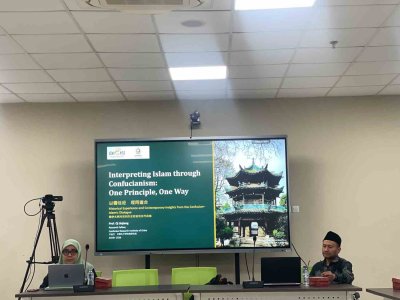
During Special Session #9, which took place from 13:30 to 15:00 WIB, the discussion focused on the historical roots of the relationship between Islam and Chinese civilization, as well as the points of convergence between the religious values of both traditions. Prof. Qi Jinjiang, a researcher from the Confucius Research Institute of China, explored the history of Islam in China—from its initial arrival through the Tang and Ming Dynasties—and highlighted the intersection of values between Islamic teachings and Confucianism.
In a session moderated by Dr. Siti Nabilah, Dr. Li Feng—a doctoral candidate at Unusia and Director of the Cheng Ho Cultural Museum in Malacca, Malaysia—discussed the long history of the relationship between China and Islam within the Nusantara (Indonesian archipelago) region. He highlighted two significant figures in the history of this relationship: Admiral Zheng He in the 15th century and Sunan Gunung Djati in the 16th century. Meanwhile, Dr. Ahmad Suaedy, M.A.Hum., founder of CSNS Unusia, examined the values of *Ahlussunnah wal Jamaah* (Aswaja) as an integral part of the Islamic tradition in the Indonesian archipelago (*Nusantara*).
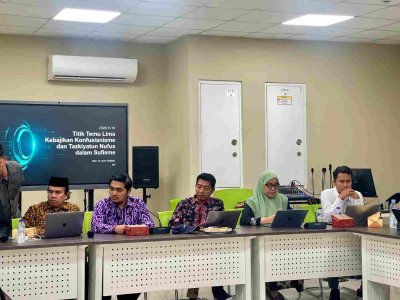
The subsequent session, Special Session #12, took place from 15:30 to 17:30 WIB, moderated by Dr. Ahmad Ginanjar Sya’ban, Dean of the Faculty of Nusantara Islam at Unusia. This discussion broadened the exploration of the relationship between Islam in the Indonesian archipelago and China, covering historical, social, religious, and environmental perspectives. Dr. Ali Abdillah, for instance, compared Sufi values within the Islam of the Indonesian archipelago with the teachings of Confucianism in China. Dr. Cand. Idris Mas’udi addressed the concept of harmony within both Indonesian and Chinese societies, while Alanuari discussed the relations between Malay Muslims and the Chinese community in West Kalimantan.
Furthermore, Mohammad Hasan Basri, a researcher at CSNS Unusia, presented a study on "ecotheology" within the *pesantren* (Islamic boarding schools) of the Indonesian archipelago. This discussion illustrated how religious traditions and thought can contribute to ecological awareness and the relationship between humanity and the environment. The session also featured contributions from Dr. Maya Mayadina of UNISNU Jepara, Dr. Jazilus Sakhok of UNU Yogyakarta, and Deny Hamdani, Ph.D., of UIN Jakarta.
Through its participation in AICIS+ 2026, Unusia has strengthened its academic contribution to the development of cross-civilizational studies—specifically concerning the relationship between Islam in the Indonesian archipelago and China. The diverse topics explored across these sessions served as a platform for the exchange of knowledge, aimed at understanding traditional heritage, expanding intercultural dialogue, and fostering ideas for progress that remain rooted in human values and harmony.