FEB Unusia Hosts Faculty Capacity Building Workshop to Strengthen National Grant Proposals

Humas Unusia
Content Writer
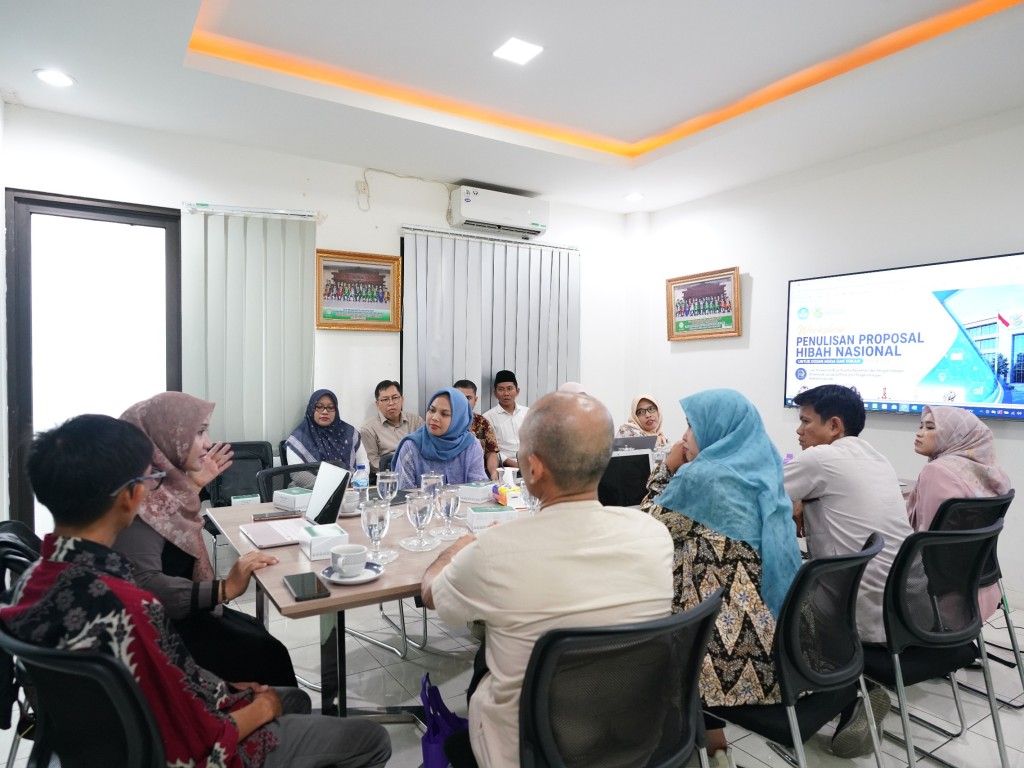
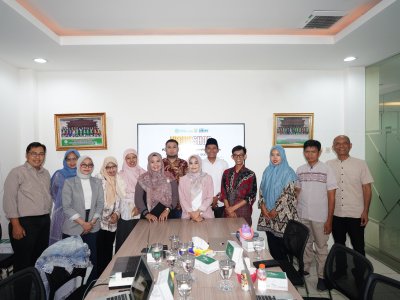
Jakarta — The Faculty of Economics and Business (FEB) at Nahdlatul Ulama Indonesia University (Unusia) held a faculty capacity-building workshop aimed at strengthening academic capabilities, particularly in the preparation of national research grant proposals. The event took place at the Unusia BPP Meeting Room in Jakarta on Friday (September 18).
The workshop featured Dr. Rismawati, SE., MSA., a permanent lecturer at Muhammadiyah Palopo University, as the resource person. The material presented was based on the guidelines for the "Impactful Diktisaintek: National Grant Proposal Writing Workshop for Early-Career and Vocational Lecturers (2026 Cycle)," organized by the Directorate of Research and Development Talent Development under the Directorate General of Research and Development, Ministry of Higher Education, Science, and Technology (Kemdiktisaintek).
In her presentation, Dr. Rismawati explained the importance of aligning grant schemes with the Technology Readiness Level (TRL) of the research. Basic research schemes fall under TRL 1–3, focusing on theoretical exploration and fundamental findings; applied schemes fall under TRL 4–6, covering prototype development and testing; while development schemes fall under TRL 7–9, directed toward industrial validation and product commercialization.
Beyond understanding the characteristics of each scheme, lecturers were encouraged to formulate research ideas based on three key pillars: researcher expertise, the national research agenda, and Sustainable Development Goals (SDGs) targets. This alignment is considered crucial to ensure that research not only addresses local issues but also remains relevant to national strategic needs and global issues.
The workshop also covered proposal preparation techniques within the BIMA/SISTER systems, ranging from formulating the background and research gap, defining problem-solving approaches, and establishing the "state of the art" and novelty, to creating a research roadmap. Lecturers are guided to clearly articulate their research positioning by comparing it with prior studies and to develop a roadmap linking their research track record, the proposed project, and the direction of future research.
Attention is also directed toward the technical aspects of proposal preparation, including the formulation of research methods, flowcharts, performance indicators, the distribution of team responsibilities, research schedules, and bibliography management. Each section must be developed consistently to ensure a logical alignment between the methodology, schedule, expected outputs, and the budget plan.
Through this initiative, FEB Unusia encourages lecturers not only to enhance the quality of their research ideas but also to strengthen their ability to translate those ideas into proposals that are systematic, measurable, and aligned with the specific requirements of the targeted grant schemes. This capacity building is expected to boost the research productivity and quality of Unusia lecturers while expanding the university's academic contribution to society.