Unusia 2026 Working Meeting Discusses New Direction and Campus Transformation Strategy

Humas Unusia
Content Writer
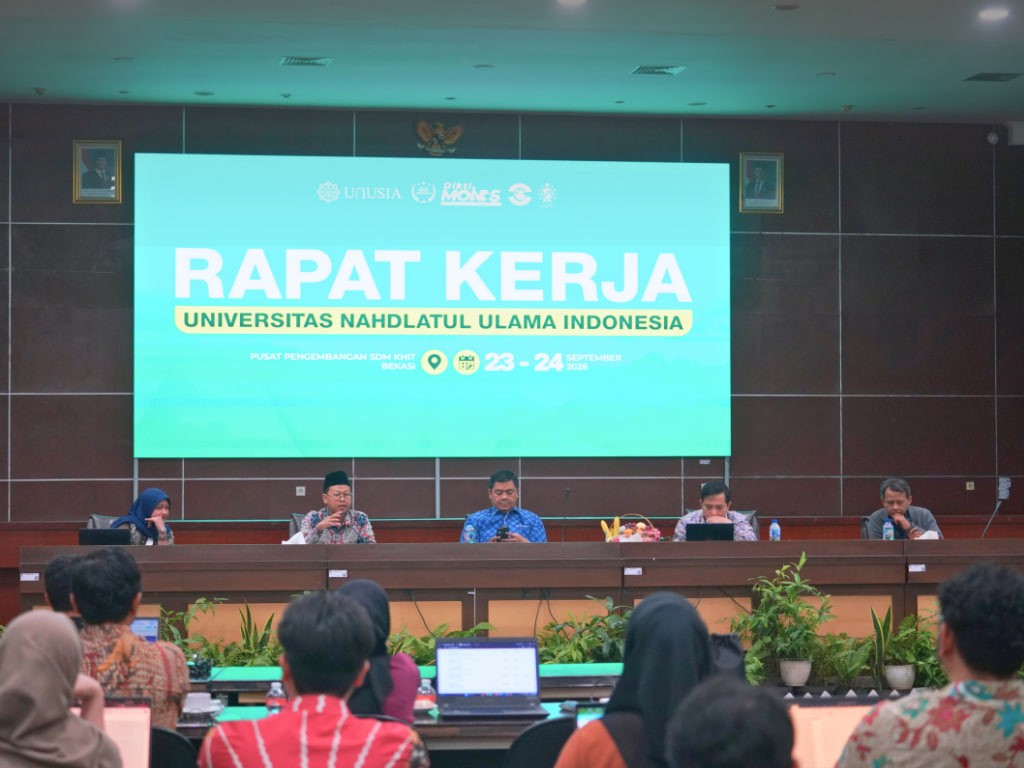
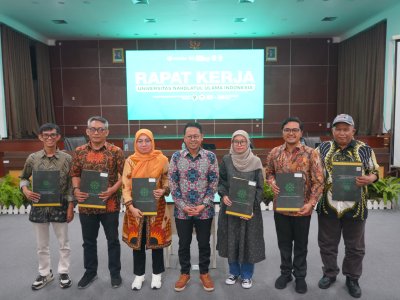
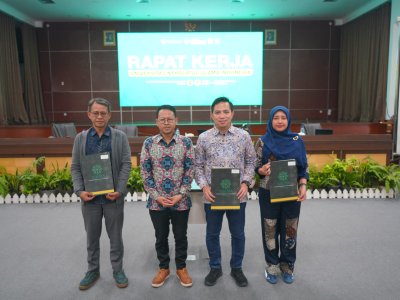
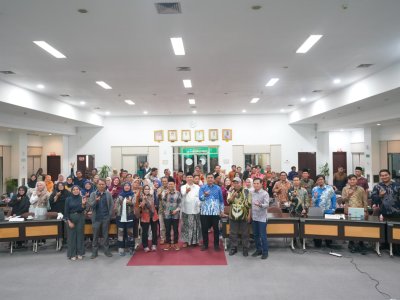
Bekasi — Nahdlatul Ulama Indonesia University (Unusia) held its 2026 Working Meeting at the KHIT Human Resources Development Center in Bekasi on Wednesday (September 23). Centered on aligning policy directions and work plans, the meeting served as a forum for university leadership to strengthen governance and formulate strategic steps for Unusia for the 2026–2030 period.
In a presentation titled "Unusia’s Future: Acceleration, Collaboration, and Transformation," Unusia Rector Fariz Alnizar outlined the university's development trajectory following the 2021–2025 institutional consolidation phase. Unusia is being steered toward becoming a leading university in science-based community development at the international level, grounded in the *Ahlussunnah wal Jama'ah An-Nahdliyyah* character. This direction is supported by strengthened community development, science-based social innovation, *Aswaja* character, and digital transformation.
According to Fariz, Unusia’s new direction goes beyond merely formulating policies and institutional targets; it requires the involvement of all university stakeholders to translate these goals into collective action.
"Unusia’s new direction is not just about where we want to go, but about how we work together to build and realize the future of Unusia," he stated.
In his presentation, Fariz explained that the 2026–2030 phase marks a pivotal moment to shift Unusia’s orientation from a primarily teaching-focused campus to a university with greater strength in community development and socio-religious research. This transformation is being driven by fostering science-based social innovation, upholding the *Ahlussunnah wal Jama'ah An-Nahdliyyah* character, and establishing an integrated digital ecosystem. A series of transformation strategies were subsequently prepared, encompassing institutional and governance strengthening, academic and curriculum development, research and social innovation, branding and student recruitment, student and alumni development, and the strengthening of national and global networks. These strategies focused on areas such as developing an Outcome-Based Education (OBE) curriculum, bolstering flagship research, digital transformation, expanding partnerships, and enhancing Unusia’s internationalization.
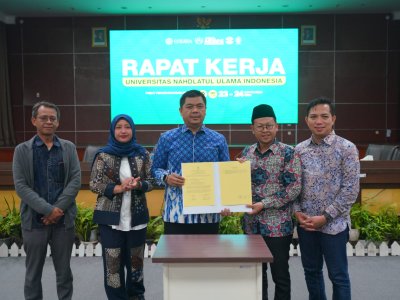
The technical session of the working meeting included the signing of performance contracts between work units and the Rector, a briefing on the organizational structure and work procedures (Ortaker), and the soft launch of the SIANJAS platform (University Performance Accountability Information System). This initial launch was part of efforts to strengthen digital-based governance and was followed by a coaching session on inputting data for the Operational Plan (Renop) into the system. Participants from each work unit received technical guidance on translating their work plans into the system as part of the 2026 Operational Plan formulation process.
During the evening session, the Chair of the Unusia Advisory and Supervisory Board (BPP), Juri Ardiantoro, provided guidance emphasizing that the plans being formulated must not remain mere documents; instead, they must include measurable targets and generate tangible impacts on the university's development.
"I hope this working meeting is not only significant for the future but also leads to actionable steps and real impact. It is not enough to simply build dreams and plans without establishing measurable benchmarks," said Juri.
Juri also emphasized the importance of collectively building Unusia’s sustainability by strengthening the campus identity, ensuring continuous student recruitment, and fostering closer ties between education and the demands of the workforce. He noted that curriculum development should aim to equip students with relevant skills through practical experience, internships, talent mapping, and strengthened networks with both the government and the private sector. In this way, Unusia would produce not merely graduates, but scholars ready to enter the workforce and contribute meaningfully to society. Through the 2026 Working Meeting, Unusia reaffirms its commitment to aligning the policy direction, targets, and efforts of all university components. The spirit of acceleration, collaboration, and transformation is expected to serve as a shared foundation for building a Unusia that is increasingly strong and adaptive, and that delivers a positive impact on society.