Unusia’s Working Meeting, Prof. Marsudi Wahyu Kisworo Advocates for Quality-Based Transformation of Private Higher Education Institutions

Humas Unusia
Content Writer
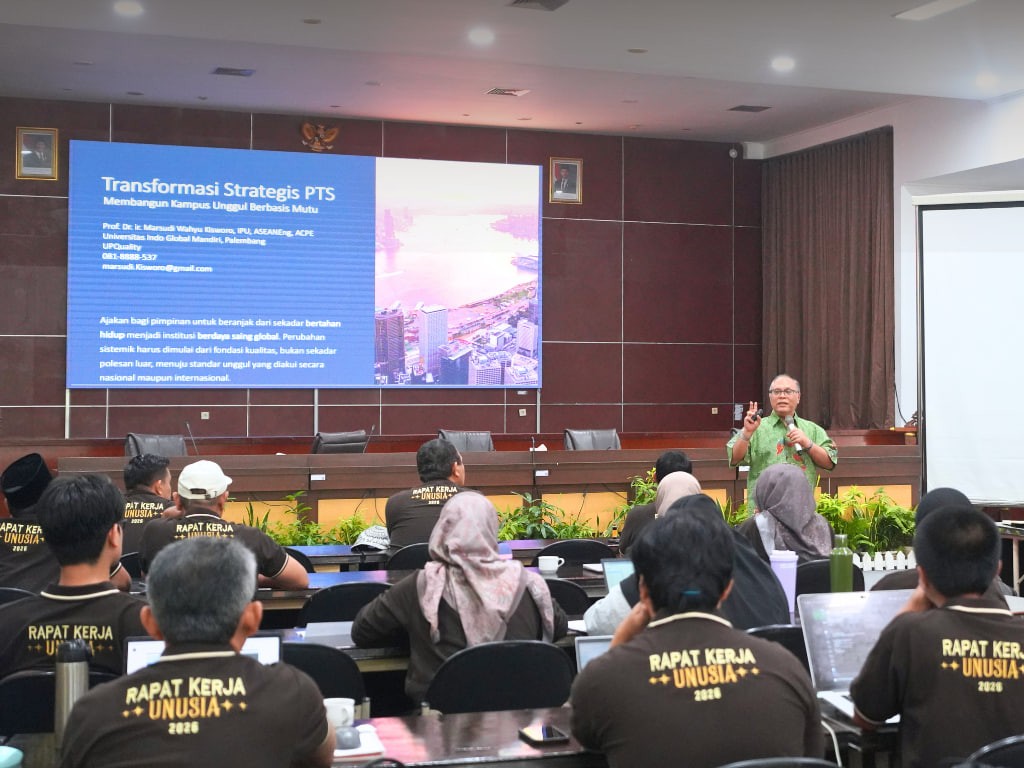
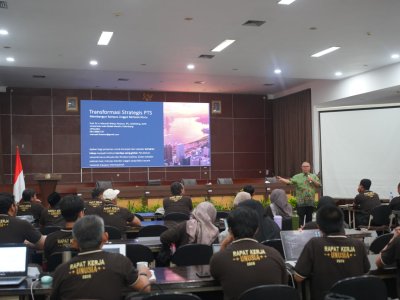
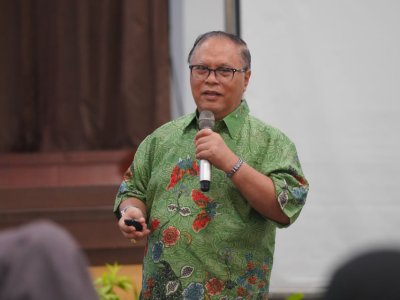
Jakarta — Private Higher Education Institutions (PTS) need to undergo strategic transformation to navigate the increasingly dynamic landscape of higher education. This point was raised by Prof. Dr. Ir. Marsudi Wahyu Kisworo, IPU, ASEANEng, ACPE, during the working meeting of Universitas Nahdlatul Ulama Indonesia (Unusia) on Thursday (September 24).
In his presentation titled "Strategic Transformation of Private Higher Education Institutions: Building an Excellent, Quality-Driven Campus," Prof. Marsudi highlighted various challenges facing these institutions—ranging from competition for students and shifting behaviors among the younger generation to demands for graduate relevance in the workforce. He argued that these challenges cannot be met through marketing strategies alone; instead, they require a response centered on strengthening academic quality and institutional systems.
He urged private institutions to move beyond a mere survival mindset and instead build competitive institutions through consistently implemented quality assurance systems. A key foundation he emphasized was the continuous application of the PPEPP cycle—Setting, Implementation, Evaluation, Control, and Improvement—as an integral part of a quality-improvement culture.
“Quality is the ultimate safeguard. With strong leadership, systems, and management, we must uphold integrity and sustainability. Once rights are fulfilled, obligations must also be met with greater excellence. Higher education institutions must continuously build quality, because we are constructing not just the institution of today, but its long-term sustainability.”
In addition to strengthening quality systems, Prof. Marsudi emphasized the importance of digitalization in university management. Digital systems can be utilized to record academic activities in a more integrated manner and provide data for decision-making, while simultaneously bolstering the institution's readiness to meet accreditation requirements and higher education reporting standards. Regarding the instructional aspect, he also encourages higher education institutions to update their curricula based on the Outcome-Based Education (OBE) framework, while strengthening Project-Based Learning (PjBL) and Case Method approaches. He believes curricula must be continuously adapted so that learning extends beyond mere academic processes to cultivate competencies relevant to the needs of society and the workforce.
Prof. Marsudi also identifies leadership as a crucial element of the transformation process. He views the Rector as playing a strategic role in ensuring that quality assurance is a shared responsibility across the institution—supported by data-driven decision-making, academic integrity, and organizational systems that do not rely on a single individual.
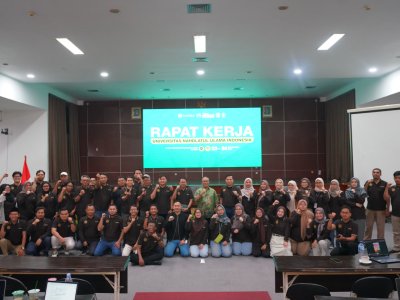
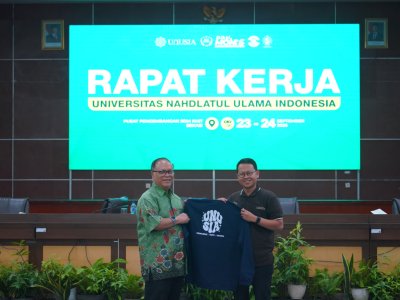
This briefing was part of Unusia’s working meeting series, which continued later that day with presentations and the finalization of Operational Plans (Renop) for the institution, faculties, bureaus, and units for the year 2026. Through these activities, Unusia reinforces its commitment to establishing governance and operational systems that support the institution's sustainable development.