Fostering Economic Self-Reliance in Islamic Boarding Schools: Unusia Leads Collaborative Research on Digital Cash Waqf at BWI’s 2026 International Conference

Humas Unusia
Content Writer
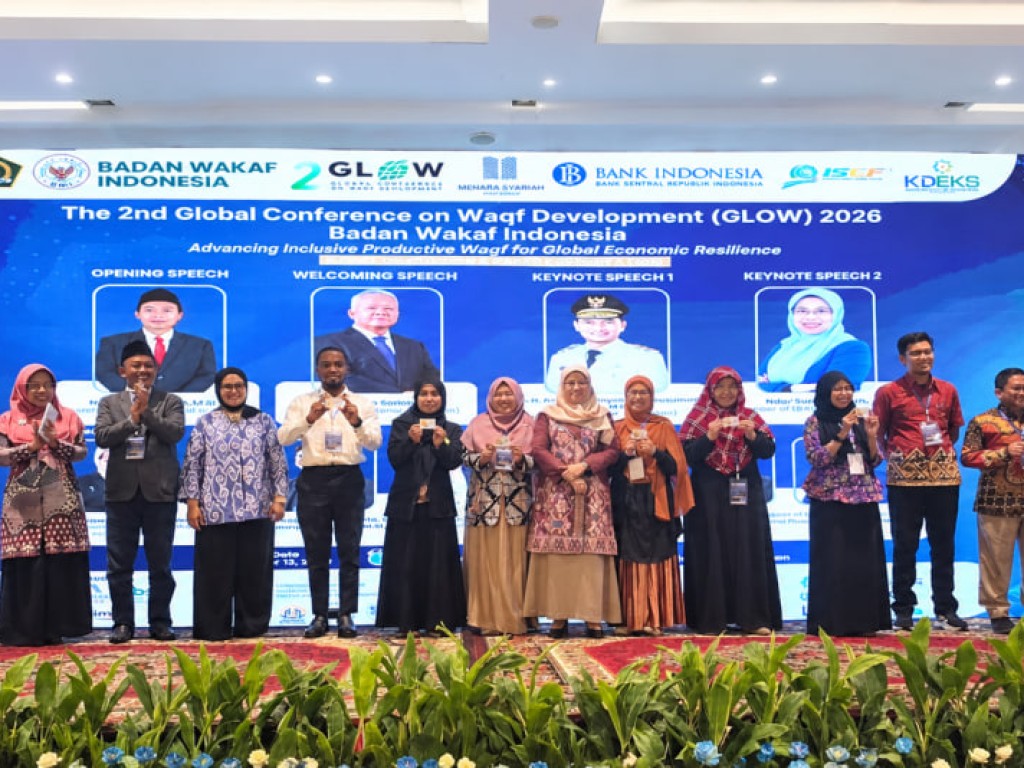
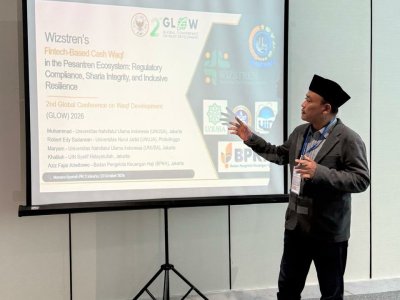
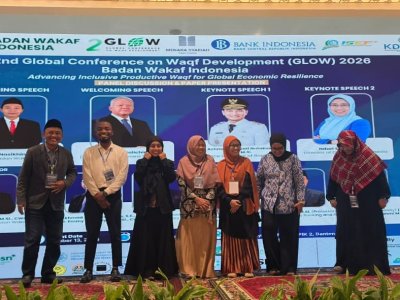
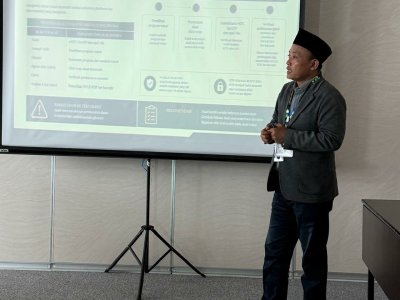
Jakarta — Universitas Nahdlatul Ulama Indonesia (Unusia) has once again achieved a proud academic milestone on the international stage. Muhammad Afifi, a lecturer at Unusia’s Faculty of Law, was selected as one of the seven "Favorite Presenters" out of 70 domestic and international speakers at *The 2nd Global Conference on Waqf Development (2nd GLOW) 2026*. The event was organized by the Indonesian Waqf Board (BWI) at Menara Syariah PIK 2 on Tuesday (October 13).
The prestigious conference, themed "Advancing Inclusive Productive Waqf for Global Economic Resilience," brought together leading presenters, practitioners, and academics from both Indonesia and abroad.
At this international event, Unusia served as the lead institution for a collaborative research team that included Universitas Nurul Jadid (UNUJA) Probolinggo, UIN Syarif Hidayatullah Jakarta, and the Hajj Financial Management Agency (BPKH) Jakarta. The team presented a paper titled "Wizstren’s Fintech-Based Cash Waqf in Pesantren Ecosystem: Regulatory Compliance, Sharia Integrity, and Inclusive Resilience."
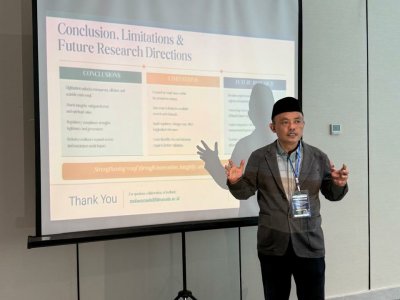
In his presentation, Muhammad explained that *pesantren* (Islamic boarding schools) in Indonesia possess immense economic and demographic potential. However, historically, *waqf* (endowment) practices within these schools have tended to rely on illiquid, immovable assets such as land and mosque buildings. This situation creates a paradox: substantial wealth held in land assets, yet a lack of liquidity flexibility to support operational needs and the development of business units.
As a solution, the research examines the role of the *Wizstren Foundation*, an autonomous ZISWAF (Zakat, Infaq, Sadaqah, and Waqf) body operating under the Association of Pesantren Economy and Business (Hebitren). Wizstren stands as Indonesia's first fintech-based cash *waqf* (endowment) manager (*nazhir*) that has grown organically within the *pesantren* (Islamic boarding school) business ecosystem.
Three Key Pillars of Innovation
Wizstren Fintech: Socio-legal research combining statutory approaches with *maqasid al-sharia* (the higher objectives of Sharia) has yielded three primary findings:
1. Sharia Integrity of Digital Contracts (*E-Sighah*)
Wizstren’s transaction architecture—comprising four stages ranging from the declaration of intent and e-KYC/OTP authentication to the issuance of the Digital Cash *Waqf* Certificate (SWUD)—has been proven to satisfy the essential pillars of *waqf* and neutralize potential technological *gharar* (uncertainty) through the concept of a *Majelis Maknawi* (virtual/conceptual assembly).
2. Regulatory Compliance and Personal Data Protection
Wizstren demonstrates robust structural compliance through the segregation of three accounts at a Sharia Bank (designated as an LKS-PWU) in accordance with PSAK 112 standards. Furthermore, the platform implements "Privacy by Design" principles to ensure compliance with Law No. 27 of 2022 concerning Personal Data Protection (PDP Law).
3. Closed-Loop Financing Scheme for *Pesantren* Resilience
Through a closed-loop financing scheme, micro-*waqf* funds collected from alumni and the community are converted into working capital for the *pesantren’s* productive business units (such as retail, drinking water production, and agriculture). The resulting business surpluses are then reinvested to fund student scholarships, teacher welfare, and educational infrastructure. As a contribution of academic thought to national regulation, the Unusia research team and its collaborators propose an "Integrated Digital Waqf Governance Model." This integrated governance model synthesizes state legal certainty, Sharia integrity, digital data protection, and the strengthening of community economies, while also addressing opportunities for cross-border *waqf* expansion for Indonesian migrant workers and the diaspora.
In recognition of its qualifications and academic merit, this research article has received an official Letter of Acceptance (LoA) from the BWI scientific committee and is recommended for publication in a reputable journal associated with the BWI GLOW2 International Conference.
Through this achievement at the international conference, Unusia continues to position itself at the forefront of higher education institutions that are responsive to the dynamics of law and Sharia financial technology. Unusia is committed not only to producing theoretical studies within the classroom but also to actively conducting applied research that delivers tangible impacts on the economic self-reliance of *pesantren* (Islamic boarding schools) and the welfare of the community.
Moving forward, Unusia will continue to expand its strategic research networks, strengthen inter-institutional collaborations, and champion the implementation of modern, inclusive, and high-integrity Sharia financial governance to foster sustainable community economic resilience.