2026 KKN Deployment: Unusia Encourages Students to Act as Ambassadors in the Community

Humas Unusia
Content Writer
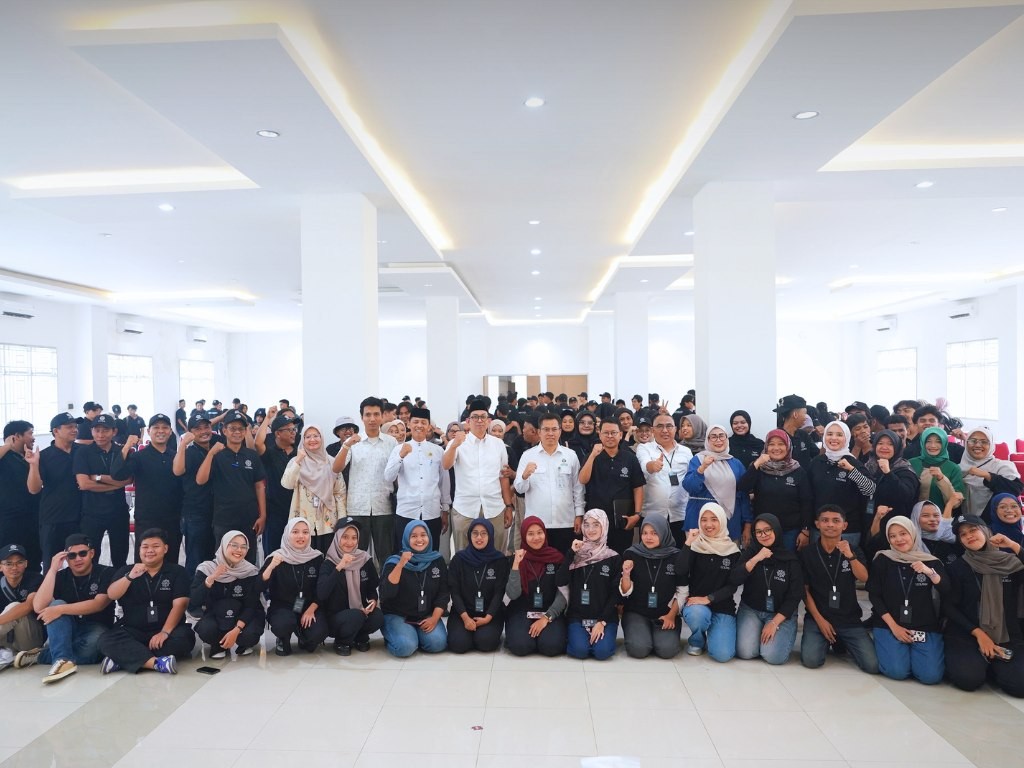
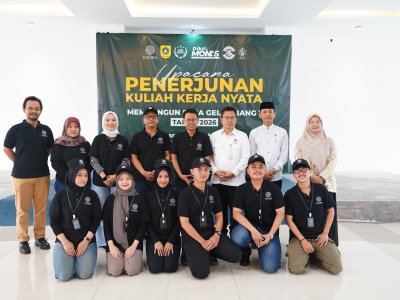
Bogor – Universitas Nahdlatul Ulama Indonesia (Unusia) has deployed 252 students for the 2026 Student Community Service (KKN) program. These students will be stationed in 11 villages from August 11 to October 3, 2026, to engage in community service while learning directly from the local residents.
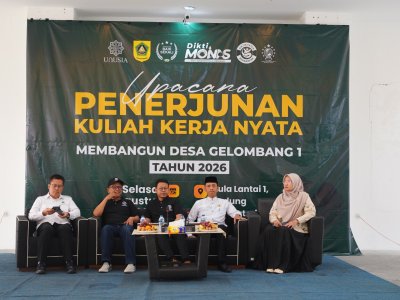
The deployment ceremony took place at the Unusia Laboratory in Parung, Bogor. In the deployment report, Unu Herlambang stated that all participating students would carry out their programs in the designated villages throughout the scheduled period.
The Head of Unusia’s Institute for Research and Community Service (LPPM), Muhammad Nurul Huda, noted that the KKN program is continuously evaluated to ensure it delivers an increasingly positive impact on the community. He also encouraged students to utilize digital assets and media as part of their community education and empowerment initiatives.
“We consistently evaluate the KKN program to ensure it yields better results for the community. Digital assets can serve as a means to showcase initiatives and educate the public,” said Muhammad Nurul Huda.
Unusia Rector Fariz Alnizar advised students to view the KKN program as an opportunity to learn while simultaneously benefiting the community. He emphasized that village development is not merely about building infrastructure, but also about understanding and cultivating the potential that already exists within the community.
“Uphold Unusia’s good name and do good work in the villages, for developing a village is not as simple as one might imagine. Village development is not about building infrastructure; it is about developing what is already there,” said Fariz.
He also encouraged students to absorb experiences, knowledge, and various insights from the community during the program. According to Fariz, students deployed to the villages represent the face of Unusia; therefore, they must act as ambassadors who reflect the university's values while contributing to Unusia’s future development. “Be ambassadors who can truly represent the face of Unusia to the public. Do not merely enhance Unusia’s reputation; become the cadres who help develop the university—today, tomorrow, and in the future,” he said.
The 2026 Community Service Program (KKN) also serves as an opportunity to expand collaboration. Dr. Edit Sulistyo Heri Susetyo, Head of the Planning Bureau at the Ministry of Forestry, outlined potential partnerships with Unusia regarding community empowerment and environmental conservation initiatives. He highlighted the issue of degraded land and the importance of community involvement in sustainable environmental management and utilization, including through waste management programs.
Support was also expressed by Ir. Ratna Pratiwi, Head of the Regional Research and Innovation Division at the Bogor Regency Regional Development Planning, Research, and Innovation Agency (Bapperida). She hopes that KKN students will serve as a bridge for applying academic knowledge while helping to identify village potential and challenges. Students are encouraged to act as “Village Innovation Ambassadors” capable of generating ideas in entrepreneurship, education, health, and other sectors.
Meanwhile, H. Waspada MK, MM, General Treasurer of the Bogor Regency PCNU (Nahdlatul Ulama Branch Board), affirmed PCNU’s readiness to strengthen collaboration between Unusia, the Bogor Regency Government, and local *pesantren* (Islamic boarding schools). He noted that collaborative potential could be further developed beyond the KKN program, extending into education and study program development.
Through the 2026 KKN program, Unusia hopes that the presence of students in these 11 villages will benefit the community while providing a learning opportunity for students to gain firsthand insight into community issues, potential, and daily life.