Unusia Rector Discusses Strengthening Governance at a Workshop on Quality in Nahdlatul Ulama Educational Institutions

Humas Unusia
Content Writer
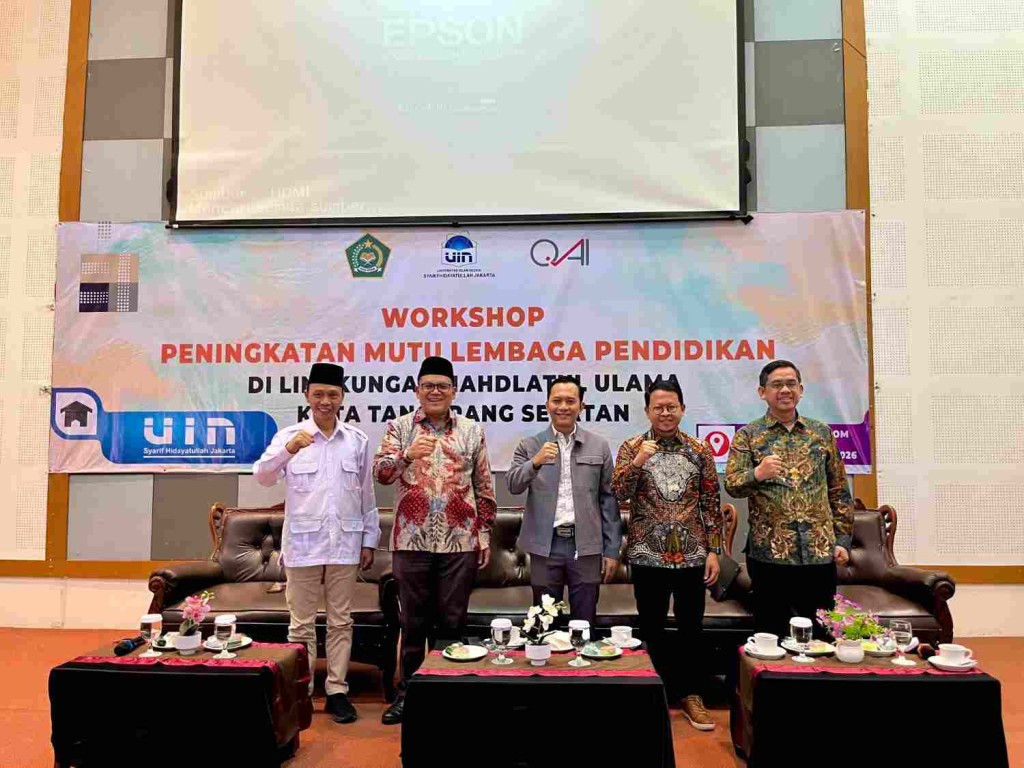
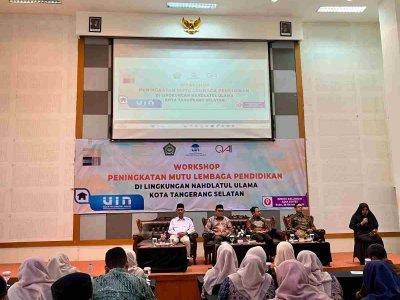
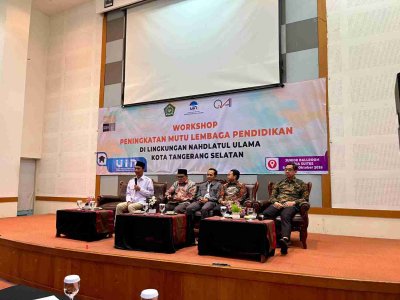
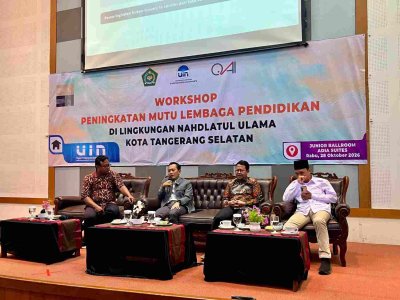
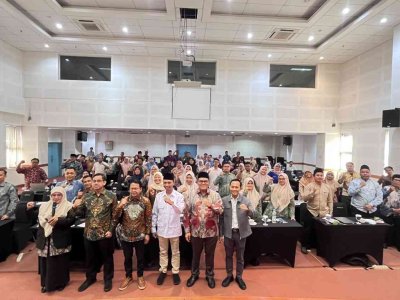
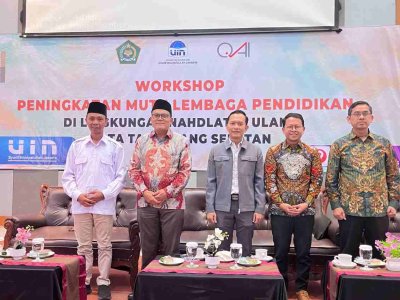
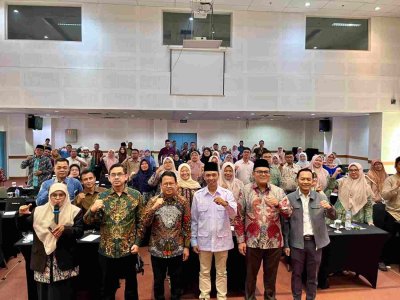
South Tangerang — The Rector of Nahdlatul Ulama Indonesia University (Unusia), Fariz Alnizar, served as a speaker at a workshop on improving the quality of educational institutions within the Nahdlatul Ulama (NU) network in South Tangerang. The event took place at the Junior Ballroom of ADIA Suites on Wednesday (October 28). During the session, Fariz presented a topic titled "Strengthening Governance and Quality in Nahdlatul Ulama Higher Education Institutions."
In his presentation, Fariz emphasized that enhancing the quality of higher education institutions must begin with sound governance and institutional management. He noted that rankings are not an end goal, but rather a reflection of the quality of governance implemented consistently. He added that the quality of a higher education institution is built through effective leadership, a functional quality assurance system, and the continuous development of academic performance and reputation.
He explained that strengthening the quality of higher education rests on three core pillars: governance, quality assurance systems, and academic performance and reputation. These elements are interconnected—ranging from leadership and institutional accountability to the implementation of an Internal Quality Assurance System (SPMI) through the cycle of Setting, Implementing, Evaluating, Controlling, and Improving (PPEPP), as well as the advancement of research, the quality of graduates, accreditation, and the institution's overall reputation.
Fariz also reviewed the 2026 ranking results for Nahdlatul Ulama Higher Education Institutions (PTNU), conducted by the LPTNU (Nahdlatul Ulama Higher Education Institute) of the PBNU (Executive Board of Nahdlatul Ulama). Among the 284 higher education institutions within the NU ecosystem that were evaluated, seven assessment variables were used: the number of active students, research and scientific publications, faculty academic ranks, academic reputation, assets and financial sustainability, alumni achievements, and the institution's connection to Nahdlatul Ulama. According to him, these indicators should be understood as an agenda for improving governance, rather than merely as numerical targets to be achieved.
Furthermore, Fariz outlined six key drivers for strengthening quality governance: leadership and institutional structure, quality assurance systems, academic human resources, research and data, finance and assets, and networking and alumni relations. He also emphasized the importance of the principles of transparency, accountability, responsibility, independence, and fairness—all of which must be embedded within the institution’s systems and daily operational practices.
As an example of such quality enhancement, Fariz highlighted Unusia’s achievements in the 2026 ranking of Nahdlatul Ulama Higher Education Institutions (PTNU). Unusia secured the top position in the "Independent Cluster" (Klaster Mandiri) with a score of 6.8173, while also placing within the 10–25 range in the overall rankings. This accomplishment serves as an illustration of the progress made in governance and institutional performance within the Nahdlatul Ulama higher education network.
Through this forum, Fariz encouraged Nahdlatul Ulama higher education institutions to build sustainable management systems, strengthen their research ecosystems, develop career paths for faculty members, and cultivate networks with various organizations within the Nahdlatul Ulama sphere. Strengthening governance is expected to serve as a foundation for improving quality, enhancing reputation, and fostering public trust in these higher education institutions.