Three Unusia Students Win 3rd Place Nationally in the BARANTIN Quarantine Innovation Challenge 2026

Humas Unusia
Content Writer
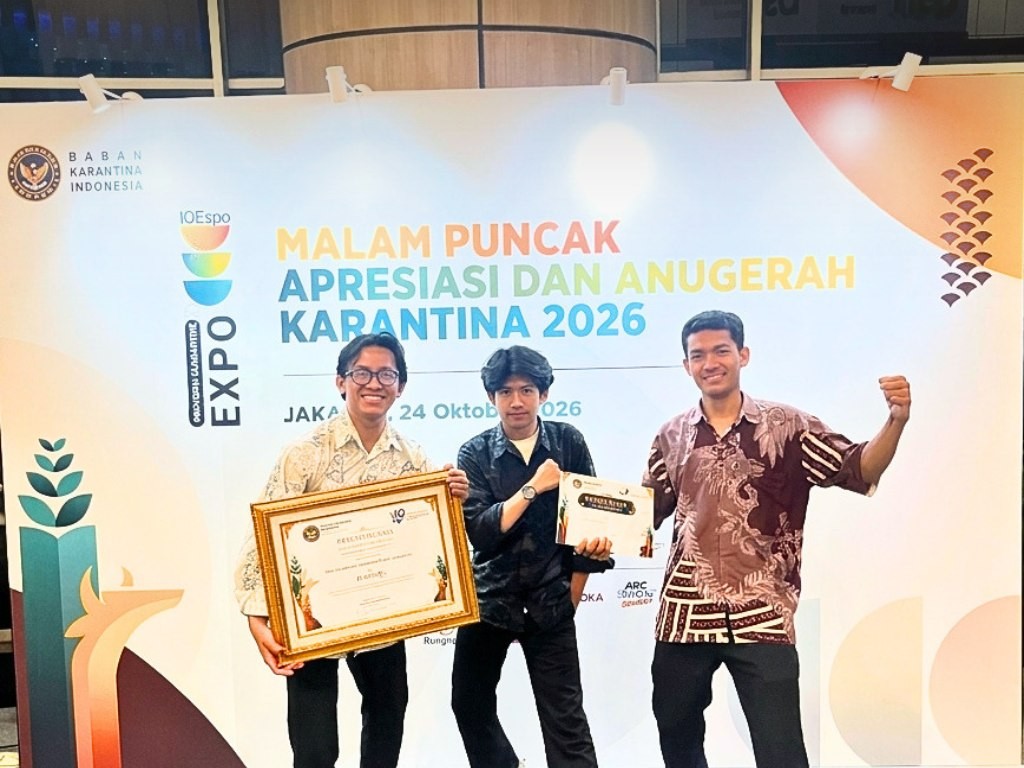
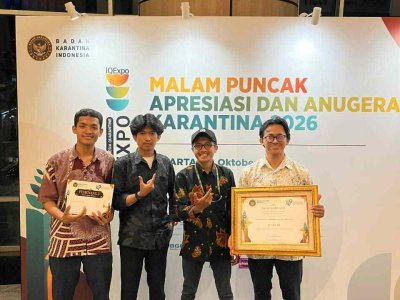
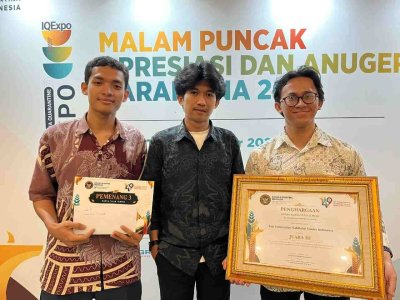
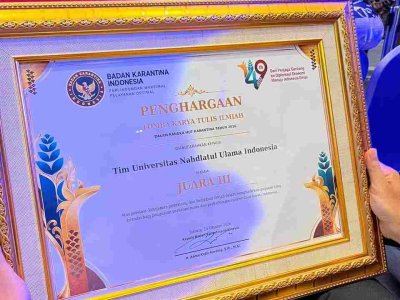
Jakarta — Three students from the Nahdlatul Ulama University of Indonesia (Unusia) secured 3rd place nationally in the 2026 Quarantine Innovation Challenge, organized by the Indonesian Quarantine Agency (BARANTIN). They achieved this recognition with their innovation, "Q-GUARD"—a cold-chain monitoring system based on the Internet of Things (IoT) and multivariate Artificial Intelligence (AI), designed to support the monitoring of frozen commodity distribution.
The team consists of Muhamad Faridzqi Suryadi and Andre Wijaya from the Informatics Engineering study program, and Windu Putra Inarwan from the Agroindustrial Technology study program. The competition, held on October 24, 2026, at the Jakarta Smesco Convention Center, began with 146 teams; 137 teams advanced to the third stage, from which the Unusia team emerged as one of the top three.
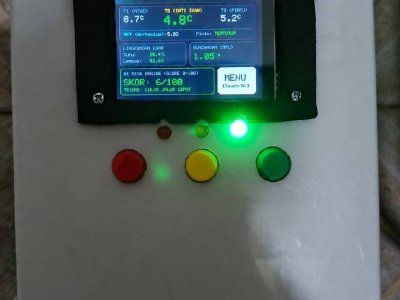
The innovation developed by the team is titled "Q-GUARD: Continuity-Aware Cold-Chain Risk Monitoring Based on IoT and Multivariate AI for Smart Quarantine of Frozen Commodities." Q-GUARD was designed to address challenges in monitoring the temperature of frozen commodities during inter-island distribution, a process that can last anywhere from 3 to 14 days. Undetected cooling failures can compromise product quality, lead to economic losses, and even result in the rejection of exports.
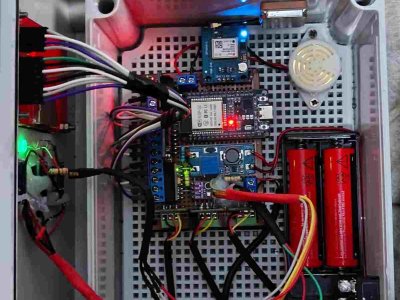
The Q-GUARD system monitors temperature at three distinct points, as well as door status, physical vibrations, and transit location. Data is automatically recorded during periods of internet disconnection and synchronized once the network becomes available again. AI technology is employed to identify patterns indicative of abnormal conditions. This information is then processed into risk assessments and digital reports to facilitate data-driven quarantine inspections.
During the development phase, the two Informatics Engineering students focused on system design, technological development, and prototype assembly. Meanwhile, Windu Putra Inarwan from the Agroindustrial Technology study program was responsible for gathering information, identifying problems, and analyzing the requirements related to the distribution of frozen commodities. This cross-disciplinary collaboration combined expertise in technology development with a deep understanding of the challenges inherent in the distribution of frozen goods.
The team’s journey to the national top three was not without its hurdles. Windu shared that the team was ranked 77th during the first and second stages of the competition. This result served as a catalyst for refining their concept, sharpening the definition of the problems addressed, and strengthening their proposed solutions. The team also clarified the title of their project to better reflect the focus and novelty of the Q-GUARD innovation.
"After re-evaluating and refining our work, thank God we managed to reach the top three," said Windu.
Beyond refining the project, the team also encountered technical obstacles during development, such as waiting for ordered components to arrive and replacing faulty equipment. Nevertheless, the team persisted with their development efforts, ultimately achieving success at the national level.
Currently, Q-GUARD exists as a physical prototype that requires further testing. The team plans to test the system using a 40-liter cool box to evaluate sensor performance and data storage under real-world conditions. Looking ahead, it is hoped that Q-GUARD will continue to be developed to support the monitoring of frozen commodity distribution, with the potential for integration into the BARANTIN digital quarantine system.
Andi Aljabar, M.T.I.—the team’s faculty advisor and Head of the Informatics Engineering study program at Unusia—praised the students' achievement. He noted that one of the challenges during the mentorship process was the wait for necessary components; whenever a device was missing or damaged, the team had to reorder the parts and wait before development could resume. “Thank God; despite all our limitations, the students’ strong spirit and determination enabled them to push beyond their boundaries and secure 3rd place in this prestigious national competition,” said Andi.
Andi hopes that this achievement will inspire other Unusia students to have the courage to develop their ideas and produce meaningful work. He also encourages the three students to share their experiences, engage in dialogue, and hold discussions with their peers—both seniors and juniors—so that a spirit of innovation and creation continues to flourish on campus.
This achievement serves as a testament to the efforts of Unusia students in leveraging science and technology to address real-world challenges. Through the development of innovations like Q-GUARD, Unusia continues to encourage its students to create, collaborate, and generate solutions that are beneficial to society.