Unusia’s 12th Graduation: 404 Graduates Step into the Workforce and Public Service

Humas Unusia
Content Writer
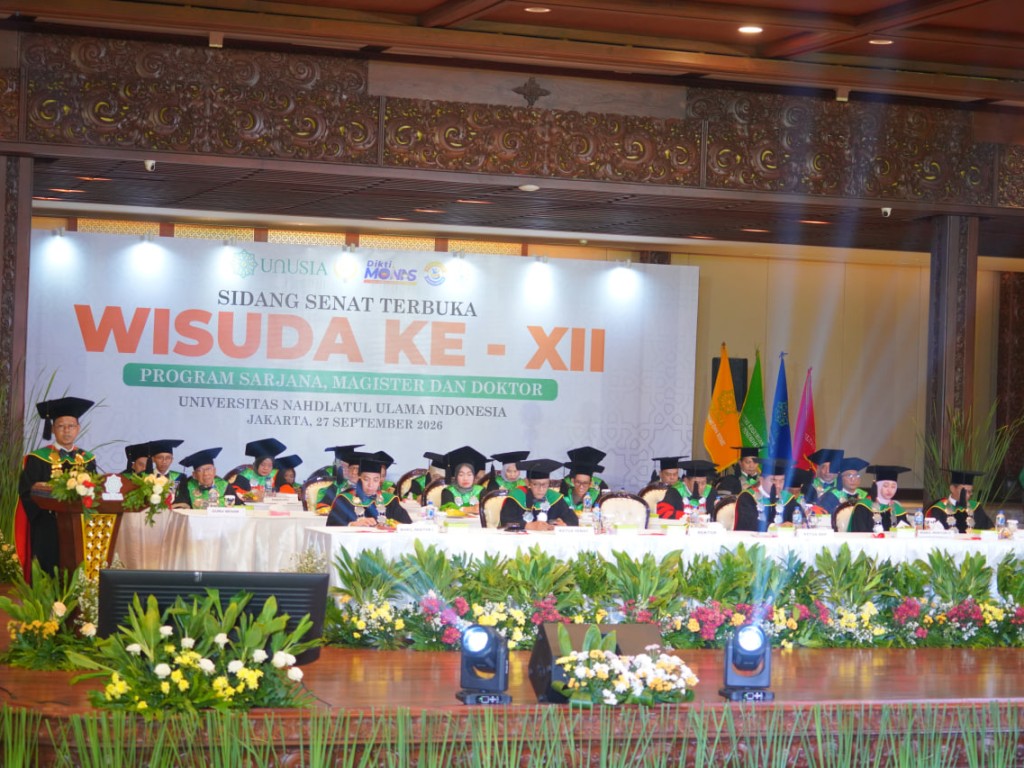
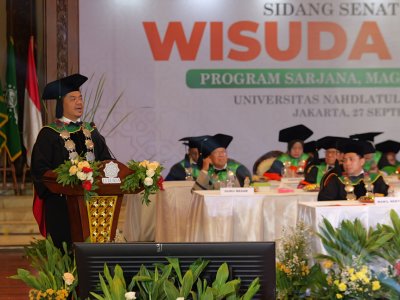
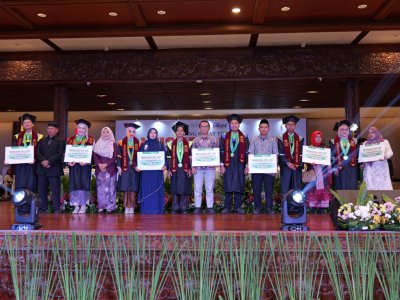
Jakarta — Nahdlatul Ulama Indonesia University (Unusia) graduated 404 students during its 12th commencement ceremony held in Jakarta on Sunday (September 27, 2026). The graduates hailed from six faculties and three levels of study: bachelor’s, master’s, and doctoral.
Of the total, 378 were bachelor’s degree graduates, 18 were master’s graduates, and eight were doctoral graduates. The breakdown by faculty was as follows: FKIP (134 graduates), FIS (62), FEB (61), FH (57), FIN (56), and FTIK (34). The presence of master’s and doctoral graduates underscores the strengthening of advanced education at Unusia, particularly regarding the development of *Islam Nusantara* (Indonesian Islam) scholarship.
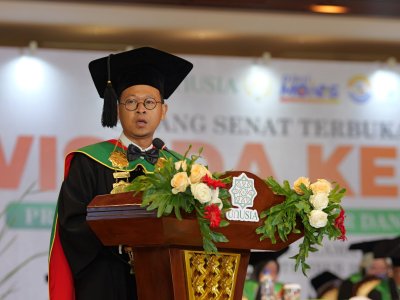
Unusia Rector Dr. Fariz Alnizar, M.Hum., stated that this achievement not only reflects the growth in the number of graduates but also illustrates Unusia’s efforts to expand access to higher education. Women accounted for 221 graduates (54.7 percent), while men accounted for 183 (45.3 percent). The graduates came from diverse regions, ranging from Jakarta and its surrounding areas to Merauke, Papua. This diversity embodies Unusia’s commitment to providing inclusive higher education grounded in the values of *Ahlussunnah wal-Jamaah an-Nahdliyyah*.
Addressing the graduates, Fariz urged them not to let Islamic values remain merely academic knowledge acquired during their studies, but to ensure these values serve as a foundation as they enter their professional lives. He emphasized that values associated with the NU (Nahdlatul Ulama) tradition must be internalized and reflected in their daily conduct. “Never let go of the anchor of *Aswaja* (Ahlussunnah wal Jama'ah) Islam. On campus, you are taught about NU (Nahdlatul Ulama) principles and internalize NU values. Make this part of your everyday life—a culture and a set of rituals that you never abandon, reflected in your behavior,” said Fariz.
Fariz also highlighted the various achievements of Unusia students and graduates in both academic and non-academic fields, ranging from national competitions, research, and publications to international accolades. According to him, these achievements are part of the process of strengthening academic quality while demonstrating the opportunities available for Unusia students to grow and contribute across various sectors.
In line with Unusia’s development direction for the 2026–2030 period, efforts to strengthen the academic sector are continuing through the pioneering of health-related disciplines, such as Digital Medical Records, Occupational Safety, and Nutrition Science. Unusia is also fostering technological development—specifically in artificial intelligence and robotics—as part of its response to the evolving needs of higher education.
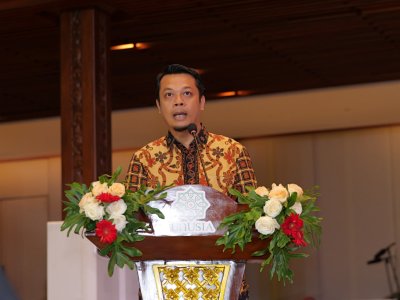
Juri Ardiantoro, Chairman of the Unusia Organizing Body (BPP), noted on the same occasion that graduates cannot rely solely on academic achievements. Upon completing their education, graduates must be prepared to enter the workforce and play an active role in society.
“Unusia does not merely prepare graduates with academic skills; it also equips them to face the professional world and take on roles within the community,” said Juri.
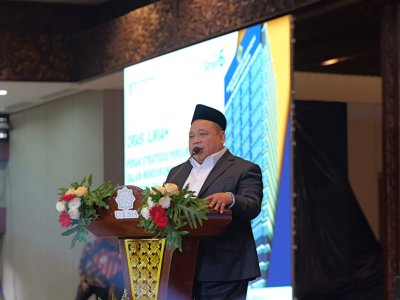
Meanwhile, Wiji Murdoko, a representative from LLDikti Region III, emphasized the importance of integrity, honesty, and ethics as integral parts of the graduates' professional journeys. He noted that professional endeavors require diligence and responsibility, while character and proper conduct (*adab*) are crucial for building trust within the community.
“Integrity is the most valuable mantra. It is character and proper conduct that enable us to excel in society,” said Wiji.
Wiji also reminded everyone that the professional journey is not always smooth sailing. Therefore, graduates must possess the courage to face challenges, complete tasks thoroughly and meticulously, and continuously develop additional skills to equip themselves for the various situations encountered in their professional lives.
BPK RI (Audit Board of the Republic of Indonesia) member H. Fathan Subchi also highlighted the struggles private higher education institutions face in fulfilling their educational roles. He noted that private institutions contribute to expanding access to higher education and upholding the mandate to intellectually uplift the nation.
“Private campuses work hard to survive and succeed; we at the BPK continue to advocate for state budget allocations that do not favor public institutions alone,” said Fathan.
This 12th graduation ceremony marks a milestone in Unusia’s journey to strengthen higher education by integrating academic development, Islamic values, and community service. The 404 graduates are expected to move forward by applying the knowledge and experience gained at Unusia across various fields of service.