Unusia Rector Advocates for Broadcasting Regulations That Protect the Public Without Silencing Creators

Humas Unusia
Content Writer

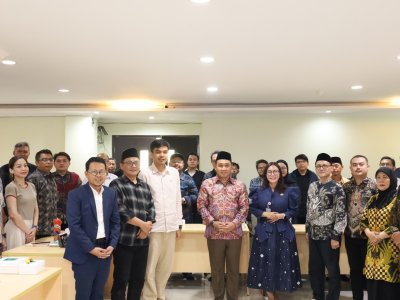
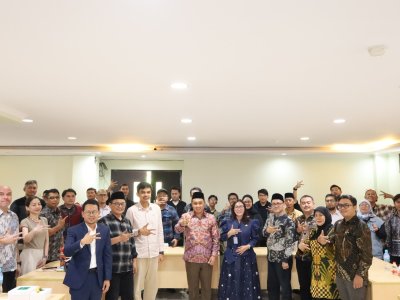
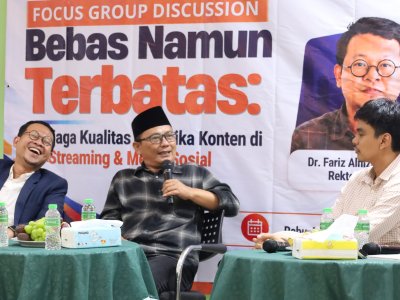
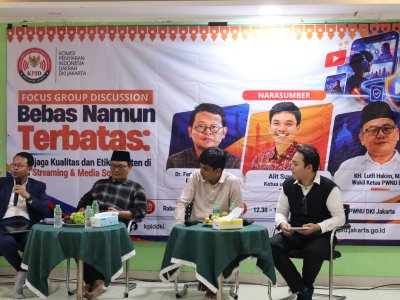
Jakarta — The Rector of Nahdlatul Ulama Indonesia University (Unusia), Dr. Fariz Alnizar, highlighted the importance of formulating broadcasting regulations that maintain content quality without compromising freedom of expression. He conveyed this during a Focus Group Discussion (FGD) organized by the Jakarta Regional Broadcasting Commission (KPID) titled "Free Yet Constrained: Maintaining Content Quality and Ethics in the Era of Streaming & Social Media," held at the PWNU Jakarta Hall on Wednesday (October 7).
At the forum, Fariz presented a paper titled "Academic Notes and Recommendations on the Broadcasting Bill." He emphasized that the evolution of digital media demands a more proportionate regulatory approach, particularly in distinguishing between the characteristics of public frequency-based broadcasting, Over-the-Top (OTT) services, and user-generated content (UGC). He noted that lumping these three categories into a single regulatory framework risks creating rules that miss the mark—such as when individual creators are treated the same as television broadcasting institutions.
Fariz also underscored that content quality cannot be measured solely by compliance with broadcasting guidelines and standards. Other aspects—such as societal benefits, public trust, relevance, social impact, and audience behavior—must also be part of the assessment. With this approach, oversight would focus not merely on the presence or absence of violations, but also on the content's contribution to public needs and interests.
Beyond the issue of quality assessment, Fariz warned of the risks associated with over-regulation resulting from the use of vague regulatory terms that lack clear criteria. He believes that ambiguous boundaries and the absence of adequate objection mechanisms could open the door to unilateral interpretations, potentially stifling creativity, satire, and social criticism. Furthermore, there is an imbalance in obligations between television and radio—which are subject to various broadcasting regulations—and digital platforms that reach similar audiences.
As a recommendation, Fariz urges that media regulations be formulated based on the specific functions and risk levels of each service. Public protection standards, such as age classification and advertising labeling, could be applied more consistently, while technical requirements are tailored to the characteristics of the respective media. He also proposes measuring broadcast quality through audience research and surveys—including collaborations between the Regional Broadcasting Commission (KPID) and universities—as well as strengthening digital literacy through the involvement of families, schools, Islamic boarding schools, civil society organizations, content creators, and the media industry.
According to Fariz, regulatory strengthening must go hand in hand with the accountability of supervisory bodies. Transparency in handling complaints, defined timeframes for follow-up actions, channels for creators to lodge objections, and capacity building for regulators to better understand the digital ecosystem are all crucial components of this effort.
He summarized these ideas in his presentation with the following emphasis:
“Good regulation neither silences nor permits unchecked freedom; it weighs options, fosters engagement, and upholds responsibility.”
The views expressed by the Rector of Unusia during the Focus Group Discussion (FGD) integrated freedom of expression, public protection, and responsibility into a unified framework for discussion. By involving academics in the dialogue regarding the Broadcasting Bill, universities contribute to promoting media policies that are balanced, serve the public interest, and remain responsive to the evolution of digital technology.