Unusia and Madani Film Festival Highlight the Legacy of Syekh Yusuf Al-Makassari’s Struggle Through Film

Humas Unusia
Content Writer
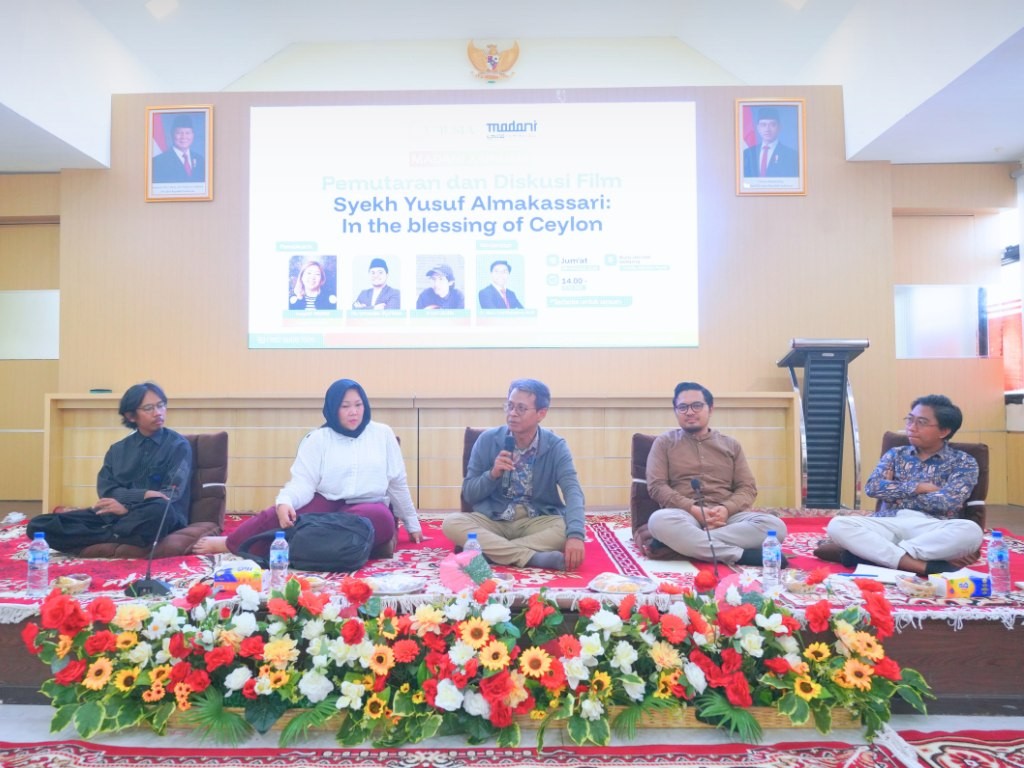
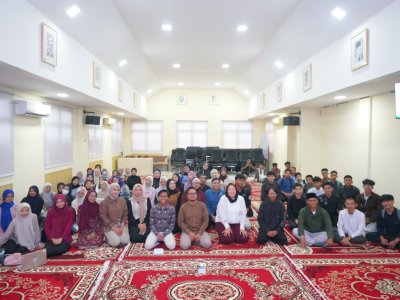
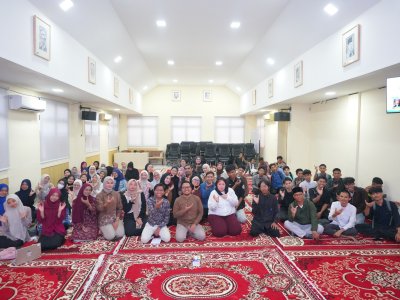
Jakarta – The struggle does not necessarily cease when a person loses their freedom. Ideas can spread beyond geographical and temporal boundaries—as evidenced by the legacy of Syekh Yusuf Al-Makassari, a 17th-century scholar from the Indonesian archipelago whose influence endured despite his exile. This narrative was the focus of a trailer screening and discussion for the film *Syekh Yusuf Al-Makassari: In the Blessing of Ceylon*, an event organized by the Madani Film Festival in collaboration with Nahdlatul Ulama Indonesia University (Unusia) at the Jakoeb Oetama Hall on Friday (October 9).
Naeni Amanulloh, Unusia’s Vice Rector for Innovation Networks and Institutional Relations, welcomed the collaboration and expressed hope that the forum would prove beneficial to the participants. She also expressed appreciation to the Madani Film Festival for the partnership established with Unusia. She noted that the screening and discussion were intended not only to broaden horizons but also to influence how participants perceive life and societal issues.
Following the trailer screening, director Irvan Aulia explained his reasons for choosing Syekh Yusuf as the subject of the documentary. He viewed the scholar as possessing a fighting spirit that could not easily be constrained by circumstances; despite his exile, Syekh Yusuf continued to exert influence through his ideas and intellectual contributions.
“Imprisonment did not halt the struggle; it merely transformed it into a battle of ideas,” Irvan stated while describing Syekh Yusuf’s journey. Through the documentary, he aims to offer the public a new way to understand the scholar’s persona and intellectual legacy.
The discussion then turned to Syekh Yusuf’s scholarly networks, led by Dr. Ginanjar Sya’ban, Dean of the Faculty of Nusantara Islam (FIN) at Unusia. He explained that Syekh Yusuf’s influence extended far beyond his birthplace in Gowa or his activities within the Indonesian archipelago. His intellectual lineage connects to various centers of scholarly tradition, including the Middle East and Sri Lanka. Tracing the teachers, texts, and intellectual traditions that shaped him is crucial to understanding the breadth of Sheikh Yusuf’s perspective and his scholarly authority during his time.
Inayah Wahid, a member of the Madani steering committee, linked Sheikh Yusuf’s journey to this year’s festival theme: *Rimpang* (rhizome). She noted that the rhizome represents a form of growth that moves not only upward but also spreads in various directions, yielding widespread benefits. She views Sheikh Yusuf’s journey as a tangible embodiment of this concept: his exile did not sever his influence; instead, it allowed the reach of his ideas to extend to far wider regions.
“One’s body may be isolated, but ideas can travel anywhere,” Inayah remarked.
Inayah also emphasized that films about Islamic life should not focus solely on religious rituals but also on how Islamic values manifest in daily life. She encouraged participants to reflect on how knowledge and spiritual practice can be translated into concrete actions to address social, economic, political, and educational issues. Through the spirit of the rhizome, she hopes to see the growth of a collective movement that generates broad benefits and is oriented toward social justice and the well-being of the community.
The discussion, moderated by Moh. Faiz Maulana, provided a platform for students to explore how the ideas of a historical figure can endure even amidst exile. This exchange of views positioned Sheikh Yusuf’s story not merely as a historical account, but as a source of reflection on the resilience of ideas, knowledge networks, and intellectual responsibility. Through this collaboration, Unusia continues to foster an intersection of film, history, and critical thought, aiming to drive tangible contributions to society.