Deploying Hundreds of Students for the Second Wave of the "Village Development" Community Service Program (KKN), Unusia Promotes Sustainable Service

Humas Unusia
Content Writer
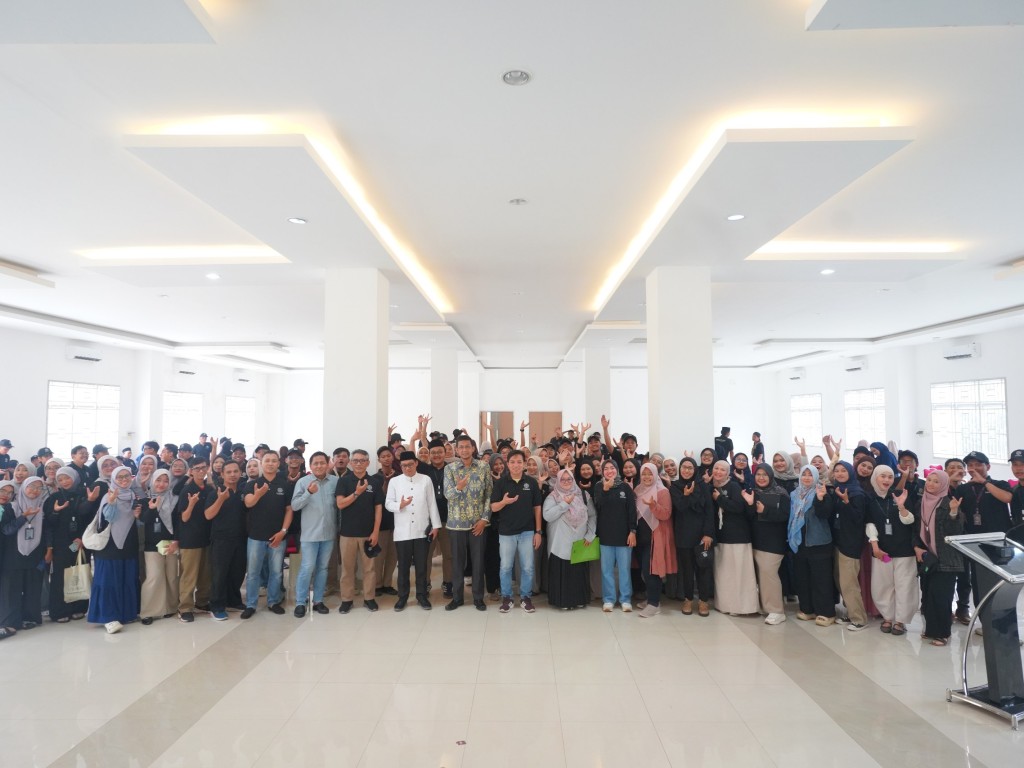
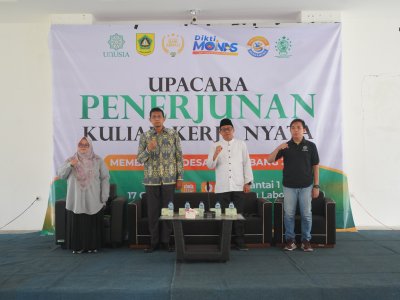
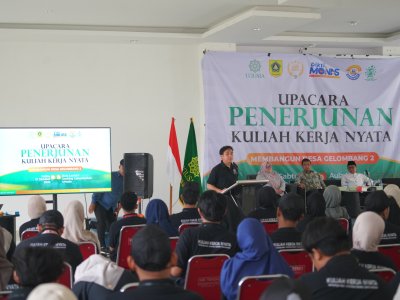
Bogor — Universitas Nahdlatul Ulama Indonesia (Unusia) has deployed 156 students for the second wave of its "Village Development" Community Service Program (Kuliah Kerja Nyata/KKN). The deployment ceremony took place on Saturday, October 17, at the first-floor hall of the Unusia Laboratory Building in Parung, Bogor. This initiative is part of the *Tri Dharma Perguruan Tinggi* (the Three Pillars of Higher Education)—specifically the pillar of community service—encouraging students to apply their academic knowledge to address the challenges and needs of village residents.
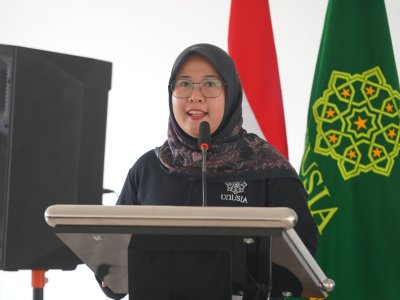
Syahadah Albaqiyatul Karimah, Secretary of the Institute for Research and Community Service (LPPM) at Unusia, reported that this second wave of the KKN program involves 156 students from four faculties and eight study programs. The students will be stationed in eight villages across six sub-districts, supported by eight field supervisors. The program will run from October 17 to December 14, 2026.
In her address to the students, Syahadah emphasized the importance of upholding the university's reputation, executing work programs with dedication, and maintaining unity, discipline, and good health throughout their service. She expressed her hope that this experience would serve as a learning process that shapes the students' character while simultaneously providing tangible benefits to the community.
"Keep learning and being of service; may this KKN experience help you become better individuals," she advised.
Fatkhu Yasik, Unusia’s Vice Rector for Academic and Student Affairs, underscored that the KKN program is a vital component of the educational process, connecting students with the realities of life in the community. He noted that it is not enough for students to rely solely on knowledge gained in the classroom; they must also learn from the experiences and expertise of the people in the communities where they serve. “Treat this period of service as a learning experience; position yourselves within the community as ‘problem solvers,’ and view the community itself as your partners in learning,” said Fatkhu.
He explained that the success of the *Kuliah Kerja Nyata* (KKN)—a community service program—is not merely determined by the execution of programs during the placement period, but also by the sustainability of the benefits after the students return to campus. Therefore, students must design programs in collaboration with the community, explore the residents' aspirations, and ensure the community is actively involved in the implementation. According to him, programs that cease the moment students leave the village fail to reflect the spirit of empowerment that serves as the core philosophy of the KKN.
“Once you return home, the programs must not die out. If they do, it simply means you acted as nothing more than ‘Santa Claus’ or seasonal event organizers,” he asserted.
Fatkhu also noted that the KKN experience can serve as a foundation for students to pursue further research. Issues encountered within the community can be developed into ideas, themes, and research projects, utilizing scientific approaches to generate relevant solutions. He expressed his hope that students would make the most of their service period and uphold the reputation of Unusia while interacting with the community.
Support for the KKN program was also conveyed by the Bogor Regency Government through Iya Mulia, S.E., a Junior-Level Analyst for Science and Technology Utilization, representing the Head of the Bogor Regency Regional Planning, Development, Research, and Innovation Agency (Bapperida). He welcomed the ‘KKN for Village Development’ initiative as a collaborative effort involving higher education institutions, local government, village authorities, and the community. This synergy is expected to yield programs that are well-aligned with the residents' needs and contribute to village development.
Meanwhile, the Head of the Bogor Regency National Unity and Political Affairs Agency (Bakesbangpol), Hari Azharul Akbar, S.H., M.H., advised the students to always seek their parents' blessings, continue to explore their own potential, and apply the knowledge they have gained throughout their academic studies. Abdul Somad, S.I.P., Chairman of the Tanfidziyah (Executive Board) of the Bogor Regency branch of Nahdlatul Ulama (PCNU), reminded students to maintain proper conduct and decorum, show respect toward the local community and stakeholders, and develop programs based on the actual issues faced by the residents.
Abdul Somad emphasized that community service must yield tangible benefits for the public, rather than serving merely as a ceremonial agenda. Students are expected to listen to the needs of the residents, seek collaborative solutions, and continuously refine their skills so that their knowledge can be consistently applied within the community.
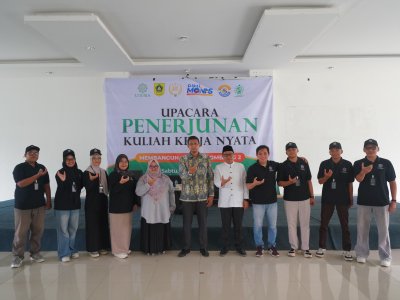
The deployment ceremony was marked by the symbolic pinning of KKN (Community Service Program) insignia by representatives of the leadership and invited guests. Through the second wave of the "KKN for Village Development" (KKN Membangun Desa) initiative, Unusia encourages students to integrate their academic knowledge with the needs of the community, foster collaboration, and implement sustainable empowerment programs. This experience is intended to help shape academic individuals who possess integrity, are empowered, and are capable of making a real contribution to society.