Unusia and Bawaslu DKI Jakarta Host Book Discussion on Just Democracy

Humas Unusia
Content Writer
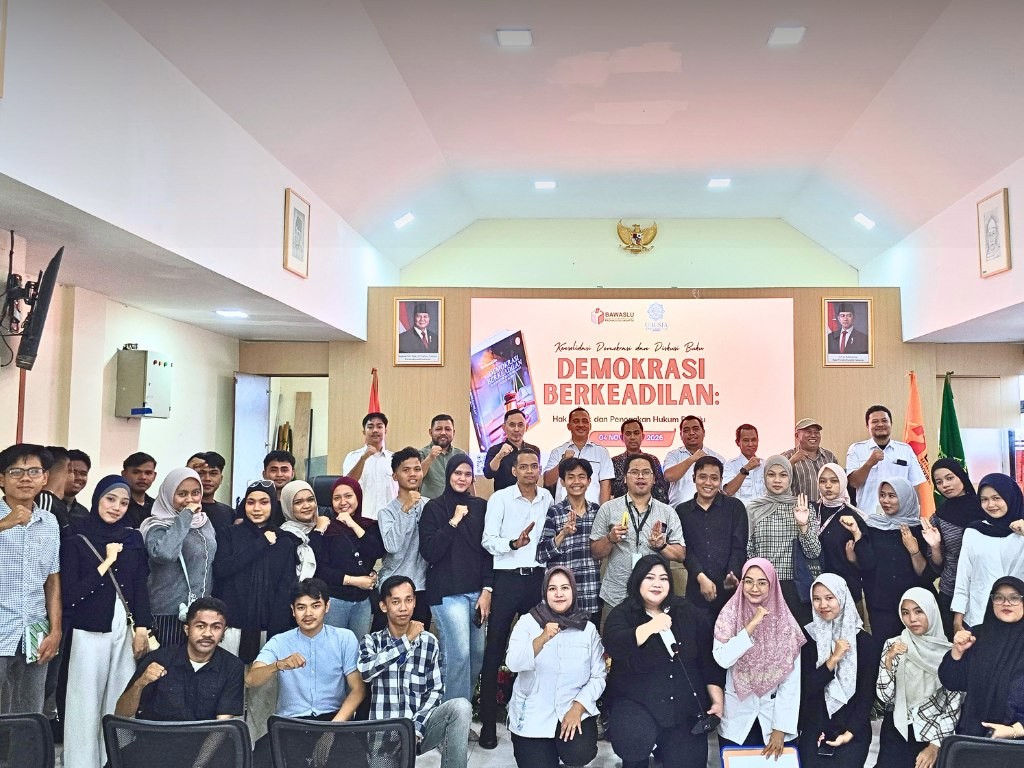
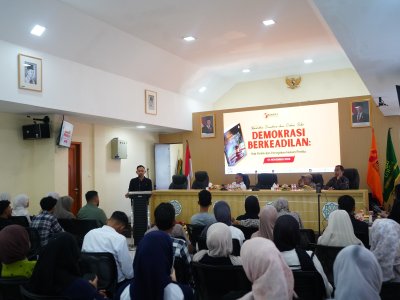
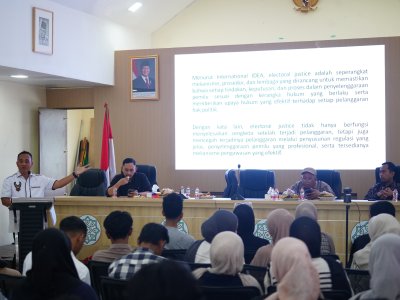
Jakarta – The Nahdlatul Ulama University of Indonesia (Unusia), in collaboration with the General Election Supervisory Body (Bawaslu) of the DKI Jakarta Province, held a session on "Democratic Consolidation" and a book discussion titled *Just Democracy: Political Rights and Election Law Enforcement* on Wednesday (November 4) at the Jakoeb Oetama Hall, Unusia, Jakarta.
The event featured the book’s author, Burhanuddin; keynote speaker H. Gugun Gumilar, M.A., Ph.D.; and Setya Indra Arifin, S.H., M.H., Head of the Law Study Program at Unusia, who delivered opening remarks. The discussion also included Dr. (Can) Erfandi, S.H., M.H., and Dr. Amsar A. Dulmanan, M.Si., who served as commentators.
In his remarks, Setya Indra expressed his hope that the event would prove beneficial to all participants.
"I hope this discussion and event will be of value to everyone attending. Through this forum, I trust we will not only gain new insights and knowledge but also develop a broader understanding of democracy, political rights, and the enforcement of election laws," he said.
The book by Burhanuddin consists of seven chapters that explore the relationship between the rule of law, democracy, and citizens' political rights, as well as various issues within Indonesia’s election legal system. The discussion covers concepts such as "electoral justice," the evidentiary process and dispute resolution, and the complexities surrounding the restriction of political rights. One of the topics addressed is the controversy regarding the prohibition of former corruption convicts from running as legislative candidates—a policy introduced under KPU Regulation Number 20 of 2018—which highlights the delicate balance between maintaining electoral integrity and protecting the constitutional rights of citizens. In his recommendations, Burhanuddin emphasized that any restrictions on political rights must have a clear legal basis established through legislation. Implementing regulations—such as the General Elections Commission Regulations (PKPU)—should not impose new limitations on constitutional rights without an explicit mandate from the law. The discussion also referenced Supreme Court Decision Number 46 P/HUM/2018, which serves as a key precedent for defining the scope of authority for election-related implementing regulations. Furthermore, strengthening electoral justice requires improvements in the quality of regulations, the capacity of election organizers, legal education, and public democratic literacy.
The issue of political rights also concerns the opportunity for all citizens—including persons with disabilities—to participate in the democratic process. As highlighted by Dr. (Can) Erfandi, this is a crucial aspect of achieving an inclusive election. Every citizen must have an equal opportunity to vote and be elected, access information, and engage in all stages of the electoral process without discrimination.
Erfandi further noted that the barriers to political participation faced by persons with disabilities do not lie solely with the individuals themselves, but also within an electoral system that is not yet fully accessible. Ensuring that polling stations are disability-friendly, providing easily understandable information, offering appropriate assistance, and guaranteeing the secrecy of the ballot are essential steps toward ensuring that political rights can be exercised in practice. As emphasized in his presentation, “Accessibility is not merely an act of generosity; it is a fundamental requirement for realizing a just democracy.”
This book discussion demonstrates that the discourse on democracy extends beyond the mechanics of conducting elections; it also concerns how laws and policies can safeguard the rights of every citizen. The involvement of academics, legal practitioners, and election organizers in this forum has created a space for the exchange of ideas regarding the protection of political rights, the enforcement of the law, and public participation in democratic life. In collaboration with Bawaslu DKI Jakarta, Unusia continues to promote the role of higher education institutions as spaces for knowledge development, critical dialogue, and the exchange of ideas in addressing national issues. This initiative is part of Unusia’s contribution toward strengthening democratic literacy and fostering an inclusive and fair democratic life that upholds the rights of every citizen.