2026 Santri Day Ceremony: Rector Emphasizes the Importance of Preserving Traditions and Scholarship

Humas Unusia
Content Writer
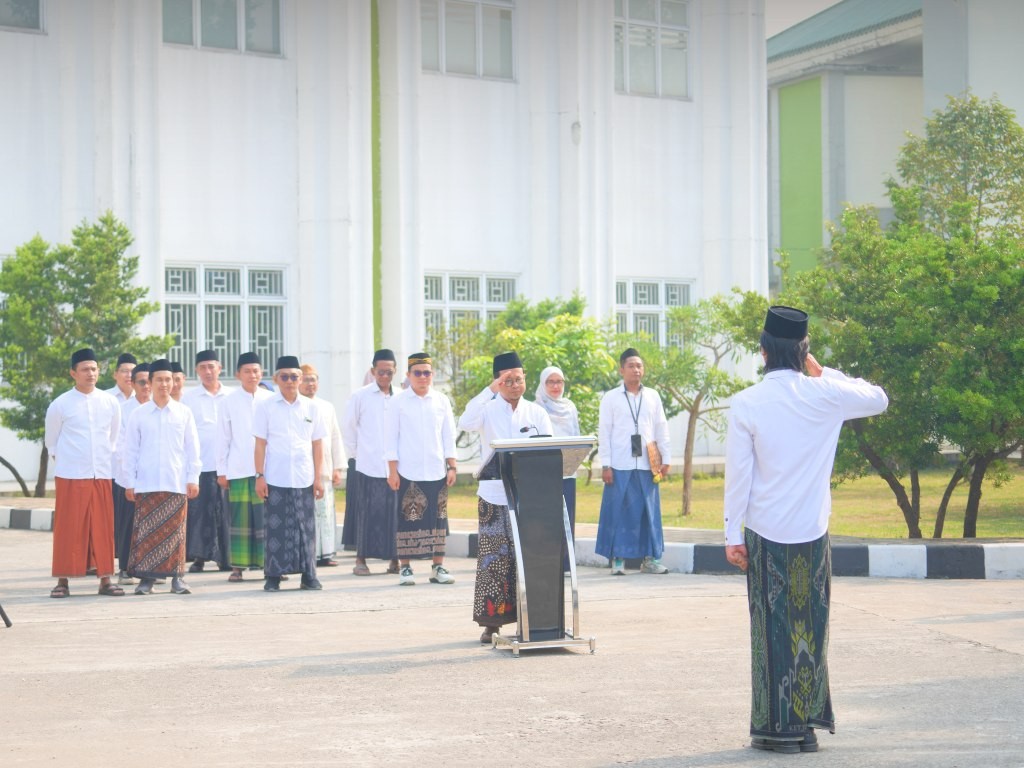
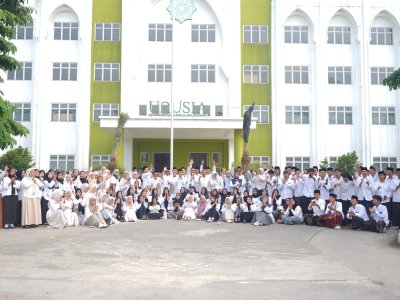
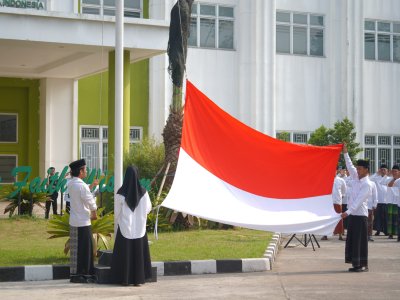
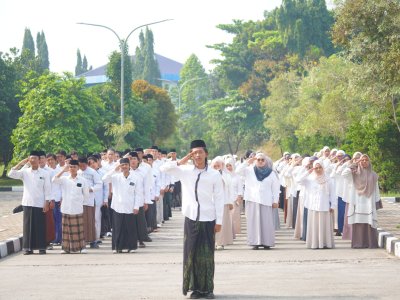
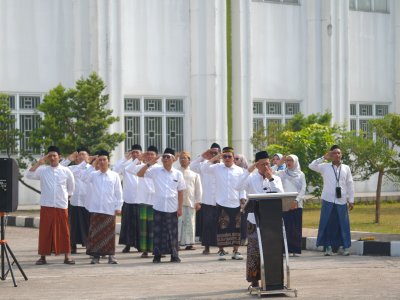
Bogor – Nahdlatul Ulama University of Indonesia (Unusia) held a ceremony to commemorate National Santri Day 2026 on the grounds of the Unusia Laboratory Building in Parung, Bogor, on Thursday (October 22). Attended by the academic community—including lecturers, administrators, educational staff, and students—the ceremony served as a moment to reflect on the significance of scholarly traditions and service to the nation.
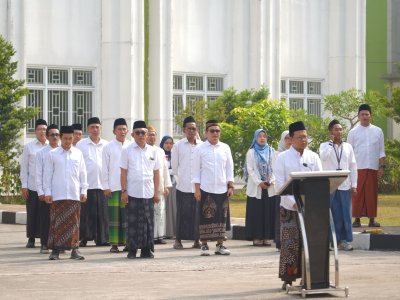
Unusia Rector, Dr. Fariz Alnizar, presided over the ceremony. In his address, he urged all participants to view Santri Day as an opportunity for reflection rather than merely a ceremonial observance. He expressed gratitude for the successful organization of the event and hoped that this commemoration would inspire the academic community to pursue continuous self-improvement.
“May this Santri Day serve as a moment for reflection,” said Fariz.
Fariz also drew a connection between the Santri Day commemoration on October 22 and Youth Pledge Day (*Hari Sumpah Pemuda*) on October 28. According to him, both occasions offer lessons on the nature of struggle and the vital role of ideas in nation-building. He noted that the struggle for the nation was not waged solely through physical resistance, but also through intellectual endeavors capable of driving change.
He encouraged the academic community to draw lessons from both commemorations as motivation to improve themselves and contribute to society. He emphasized that historical values must be kept alive, serving as a foundation for the current generation to navigate future challenges.
Furthermore, Fariz underscored the importance of preserving traditions as a cornerstone for moving forward. Within the *Ahlussunnah wal Jamaah* tradition, this is manifested, among other ways, through the safeguarding of *sanad* (chains of transmission) and the continuity of scholarly traditions. Traditions are not merely relics of the past; they are the roots that provide a firm footing for future generations to grow and flourish. “Nurturing one’s roots means nurturing tradition. This tradition serves as the root, providing us with a foundation upon which we can move forward,” he stated.
Fariz also emphasized the importance of honoring those who came before us—those who bequeathed knowledge—as well as those who carry forward the educational process. Teachers, lecturers, instructors, and peers all play a role in ensuring the continuity of knowledge. Showing respect for them is part of the effort to sustain a scholarly tradition, allowing it to live on and flourish from one generation to the next.
Beyond highlighting the significance of scholarly tradition, Fariz urged the academic community to deepen their concern for humanitarian issues. He invited all participants to offer prayers that the forest fires in Indonesia might soon be extinguished and that the communities affected by these disasters might recover.
He expressed his hope that those impacted by such crises could return to living well, including gaining access to educational opportunities—much like those enjoyed by the academic community at Unusia. According to his message, caring for others is an integral part of one’s service to the nation and to humanity.
Through this commemoration, Unusia reaffirms the importance of maintaining the continuity of scholarly tradition while simultaneously fostering social concern. Preserving the legacy of knowledge and serving the nation are complementary pursuits in building a generation that is rooted in values, open to the future, and committed to the cause of humanity.