Unusia Hosts Pre-Congress Discussion on the Transformation and Authority of NU Pesantren

Humas Unusia
Content Writer
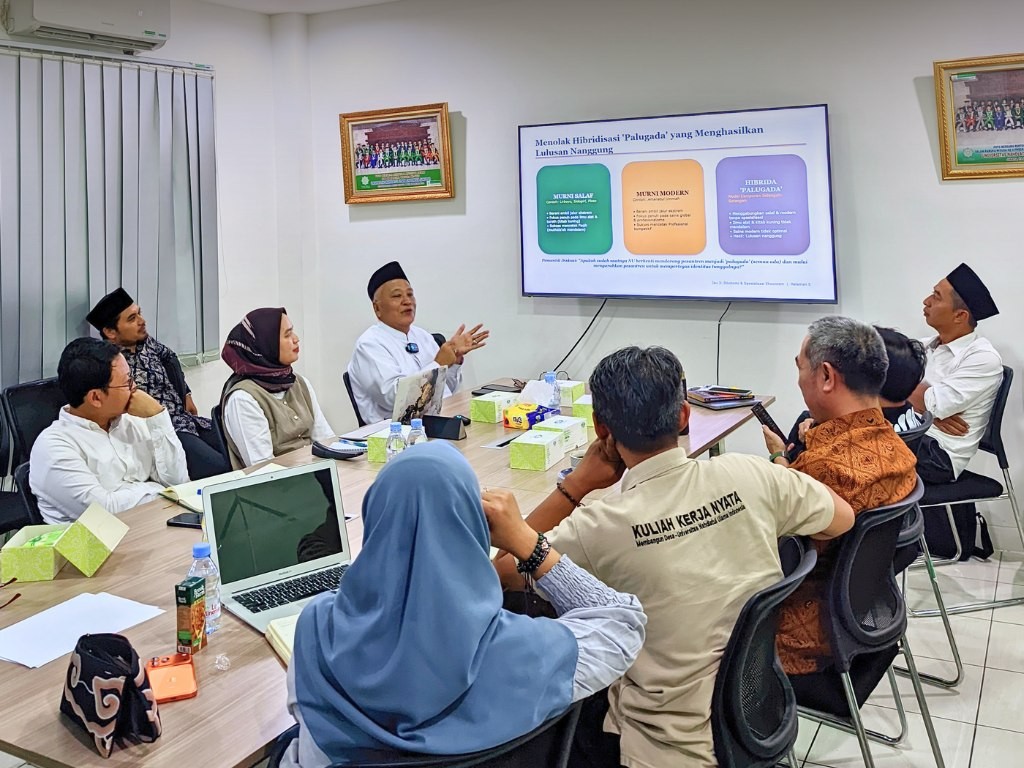
Jakarta – Nahdlatul Ulama Indonesia University (Unusia) once again held a discussion series leading up to the 35th Nahdlatul Ulama (NU) Congress on Saturday (August 1). This third discussion addressed the theme "Do *Pesantren* (Islamic Boarding Schools) Still Form the Heart of NU? Tradition, Authority, and the Transformation of Islamic Education," serving as a space to reflect on the strategic position of *pesantren* amidst social changes, educational developments, and the organizational dynamics of NU.
The event featured K.H. Mujib Qulyubi; Unusia Vice Rector for Academic Affairs, Research, and Community Service Fatkhu Yasik; Nusantara Islamic philologist Ahmad Ginanjar Sya'ban; and Unusia Faculty of Nusantara Islam lecturer Idris Masudi. The speakers discussed various challenges facing *pesantren*, ranging from leadership succession and the transformation of educational systems to the importance of maintaining institutional independence.
In his presentation, K.H. Mujib Qulyubi highlighted the importance of upholding scholarly authority during the process of leadership succession within *pesantren*. He argued that leadership should not rely solely on lineage but must be supported by scholarly competence to ensure the quality of education is maintained. He also criticized the phenomenon of *pesantren* combining various educational models without a clear direction, a practice that risks undermining the depth of scholarly study. Consequently, he urged *pesantren* to clarify their identities and development focus in alignment with their respective visions.
Meanwhile, Fatkhu Yasik explained that within the context of modern organizational development, *pesantren* continue to play a vital role as a source of core values for various Nahdlatul Ulama institutions, such as universities, hospitals, and economic entities. He stated that NU needs to strengthen these subsystems to meet increasingly diverse societal needs without abandoning the *pesantren* values that serve as their foundation. Ahmad Ginanjar Sya'ban offered a historical perspective, noting that *pesantren* scholars from the Nusantara region served as a global reference point for the Islamic world during the 16th and 17th centuries. He believes the intellectual tradition of *pesantren* still holds immense potential to make contributions on the international stage. Consequently, the involvement of academics and higher education institutions is essential to bridge *pesantren* scholarly ideas with the global arena, thereby increasing their visibility.
Meanwhile, Idris Masudi highlighted the importance of preserving *pesantren* independence amidst evolving educational regulations. He argued that strengthening *waqf*-based (endowment) funding systems and institutional self-reliance are strategic measures to ensure *pesantren* retain the autonomy to develop curricula aligned with their unique character and scholarly traditions.
Through this discussion, speakers and participants reached a consensus that the transformation of *pesantren* is inevitable. However, such changes must remain grounded in core *pesantren* values—such as *tafaqquh fiddin* (deep understanding of religion), sincerity (*ikhlas*), *sanad* (scholarly lineage), and *barakah* (divine blessing)—so that these institutions can continue to fulfill their roles as centers for character building and knowledge development, as well as guardians of the Nahdlatul Ulama intellectual tradition.